Euclid releases its first major map, capturing light from more than a billion objects
On 12 November 2026, ESA published Euclid DR1-Foundation: about 13 months of observations covering 1,900 square degrees and 1.7 million gigabytes of data.
Listen
AI-generated voices, script based on this article · 3:37
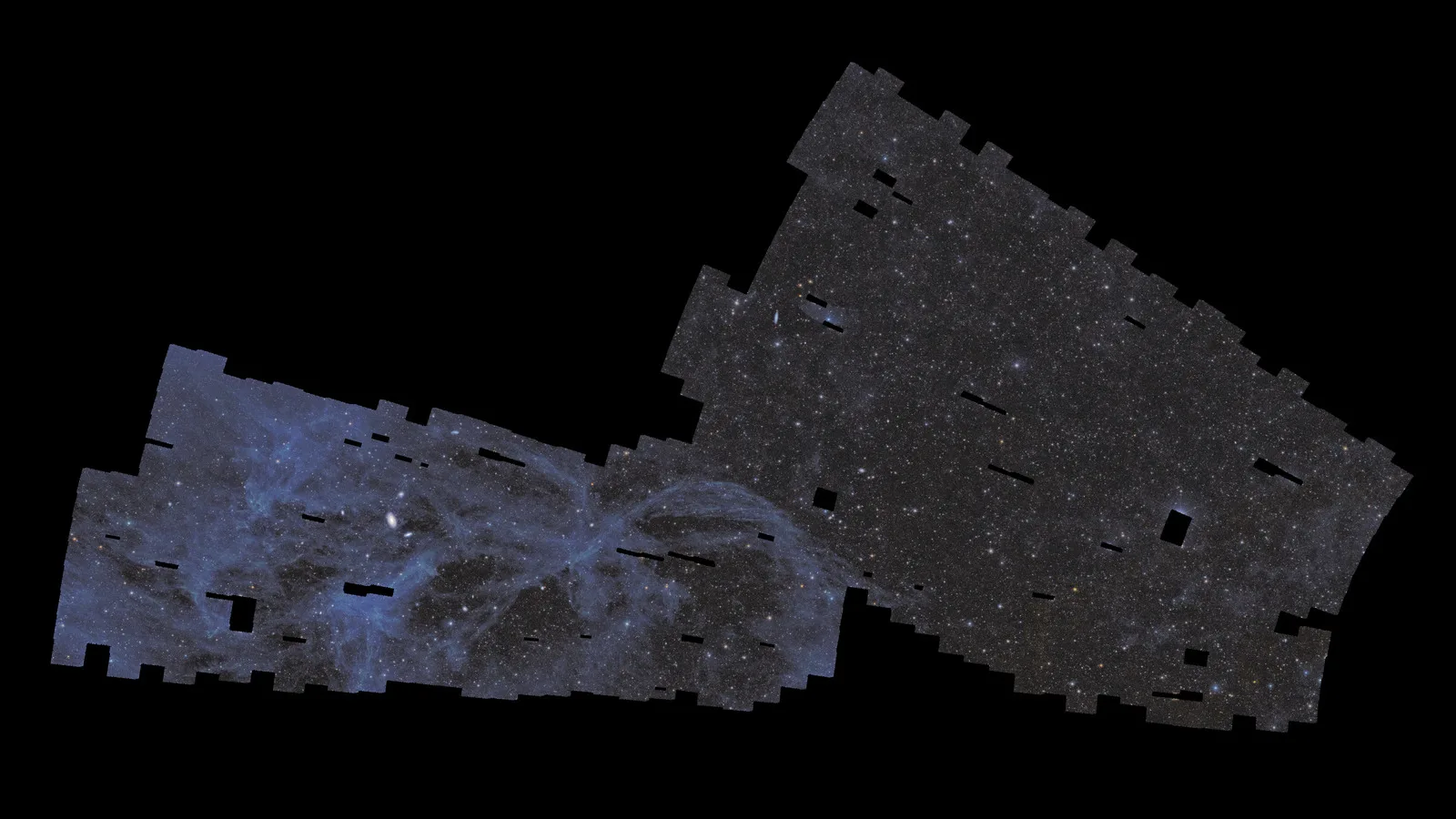
On 12 November 2026, the European Space Agency released Euclid DR1-Foundation, the dark-Universe mission's first major batch of survey data since its mid-2023 launch. According to ESA, the release comprises about 13 months of observations covering 1,900 square degrees of sky — an area ESA compares to 9,500 full Moons — and 1.7 million gigabytes of data, capturing the light of more than a billion objects.
ESA says the catalog includes more than 900 million galaxies, about 15,000 strong gravitational-lensing candidates, more than 60 million quasar candidates, and spectra of more than 160 million sources. The agency describes the strong-lens list as the largest such catalog yet assembled, larger than all previous catalogs combined. Those lens and quasar lists are candidates, pending follow-up.
A northern-sky mosaic released with the data combines 740 Wide Survey observations collected in autumn 2024 and spring 2025 and covers 367 square degrees, including the spiral galaxy Messier 81. The release is a foundation, not the finished three-dimensional map of the dark Universe that Euclid is being built to produce. ESA says the full DR1 release will be completed in mid-2027, with the later part also bringing data on galaxy clusters and weak lensing.
Why it matters
Mapping how galaxies cluster, and how their light is bent, is how Euclid will test ideas about dark matter and dark energy. A first, year-scale public catalog gives astronomers the raw material to start that work, and a large list of rare lenses, before the complete weak-lensing and cluster products arrive.
Looking ahead (speculative)
Once the mid-2027 products are in hand, statistical studies of weak lensing and clusters should tighten Euclid's cosmological measurements. Until then, DR1-Foundation is a wide, deep inventory, not the mission's final map.
Sources
Sources
More in Space
Space
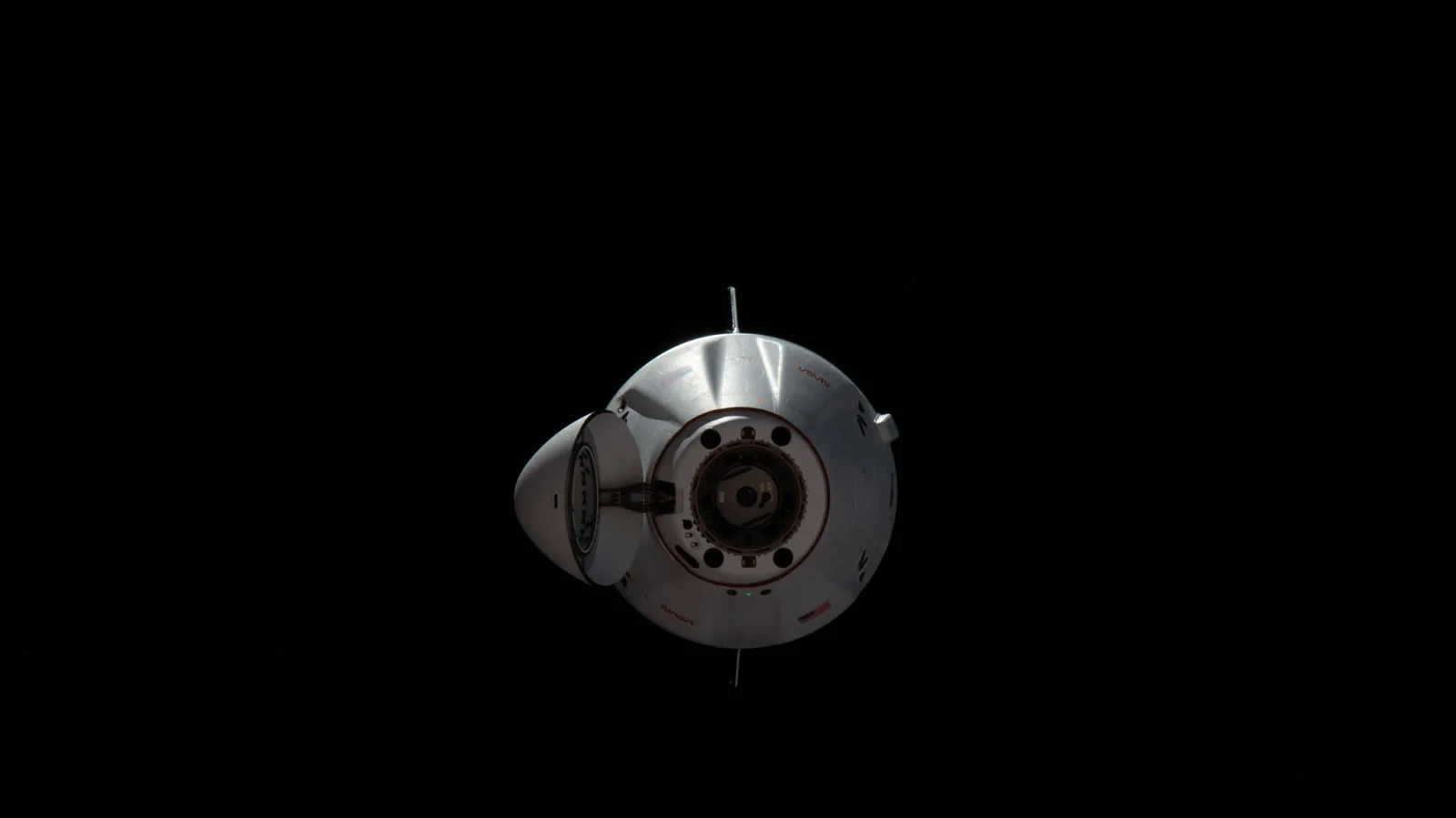
A Dragon capsule returns station samples, including a bioprinted vessel construct and tumor organoids
NASA said an unpiloted SpaceX Dragon splashed down in the Pacific Ocean near Los Angeles at 2:03 p.m. Pacific Standard Time on 21 November 2026, completing the 35th commercial resupply mission.
Space
ESA selects a seven-spacecraft Plasma Observatory as its next medium-class mission
On 19 November 2026, ESA Member States chose Plasma Observatory to study how the solar wind interacts with Earth's magnetic shield, with a launch provisionally foreseen for the late 2030s.
Space
Astronomers reconstruct a star's spiral into its giant companion in Andromeda
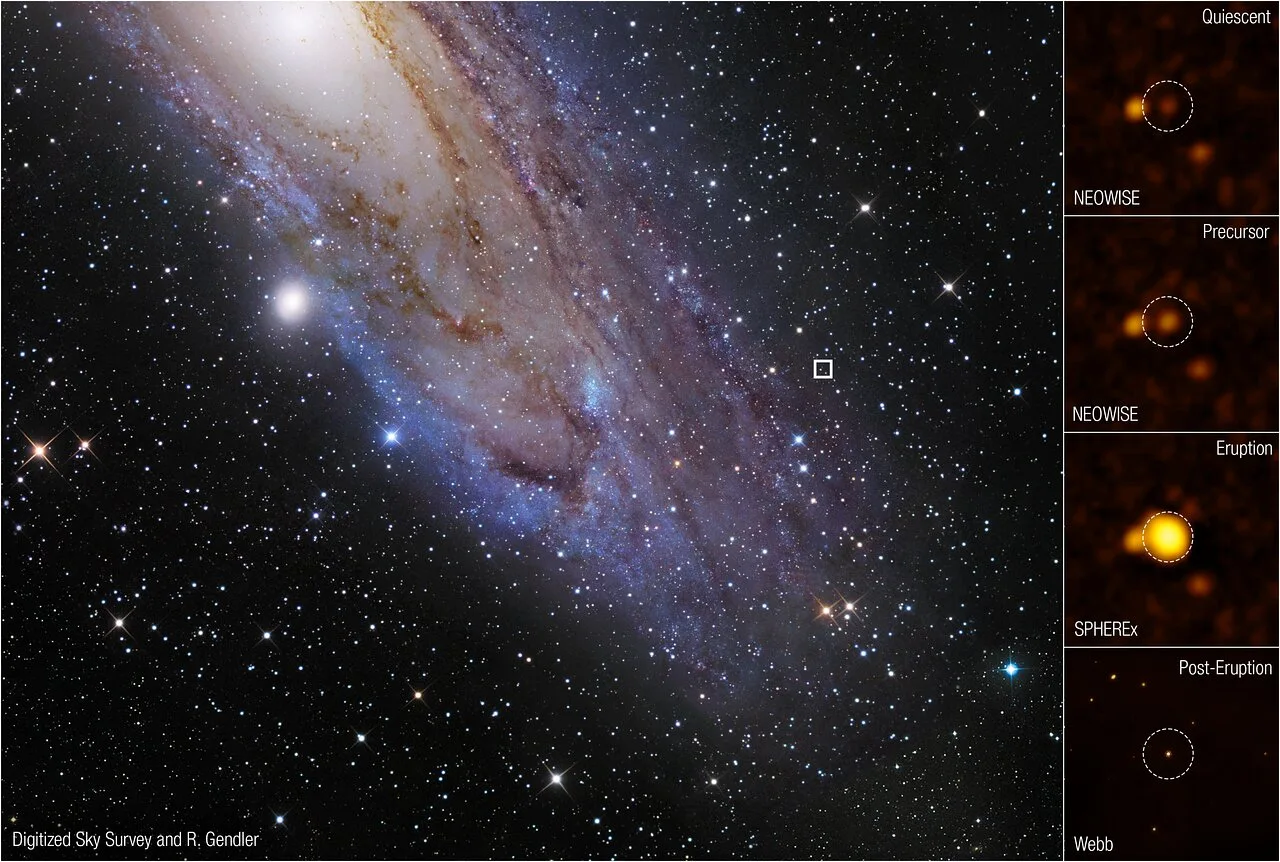
A Nature paper and a NASA account, both dated 18 November 2026, reconstruct the common-envelope inspiral of AT 2025abao, a transient nicknamed Bao at the edge of the Andromeda galaxy.
Space
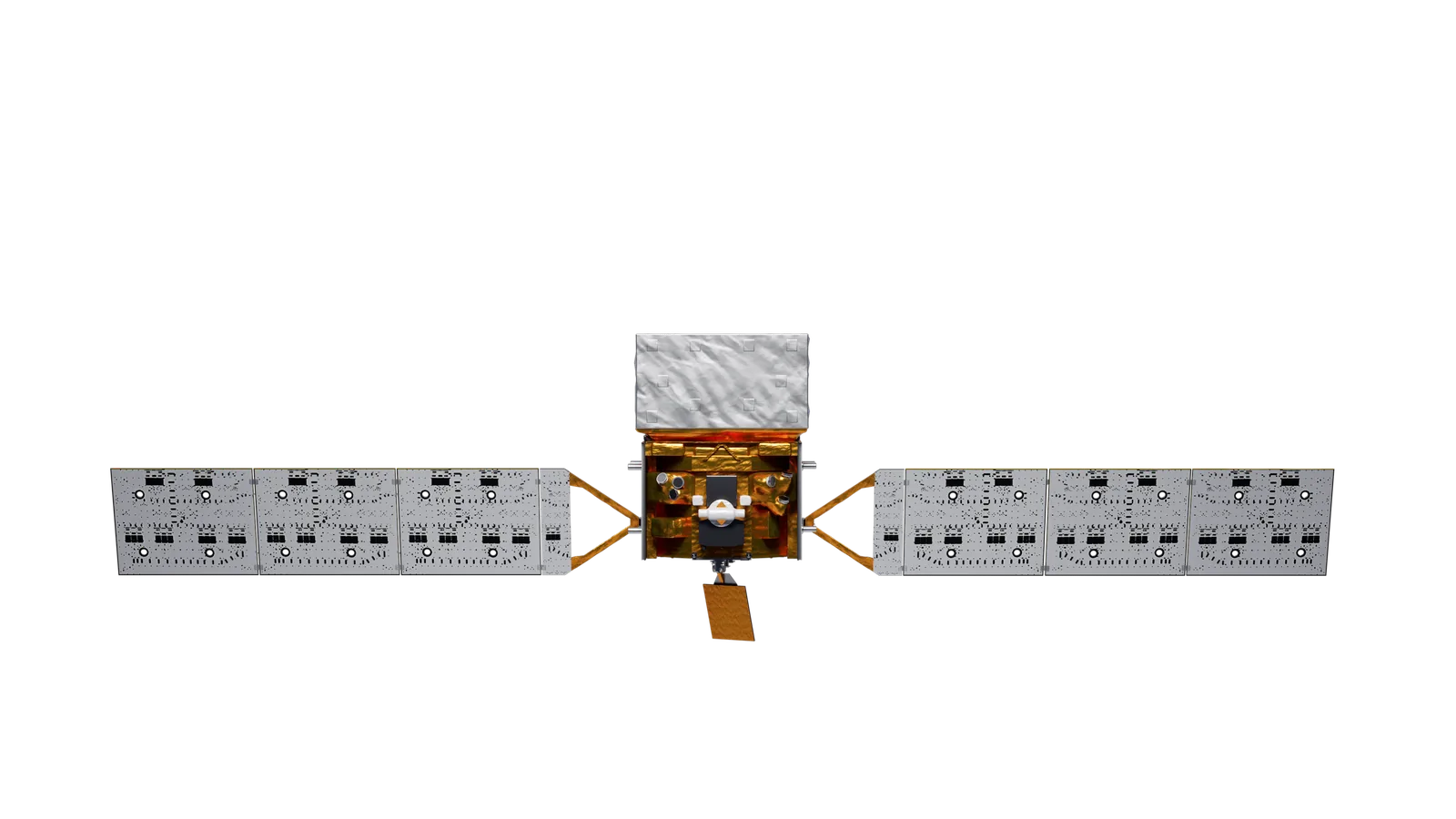
Cryptography-inspired algorithm finds a gamma-ray pulsar that a 600-CPU-year search missed
A cryptography-inspired lattice search spotted an isolated pulsar in 15 years of public Fermi data, in about 10 CPU hours, after the previous best method missed it.