Cryptography-inspired algorithm finds a gamma-ray pulsar that a 600-CPU-year search missed
A cryptography-inspired lattice search spotted an isolated pulsar in 15 years of public Fermi data, in about 10 CPU hours, after the previous best method missed it.
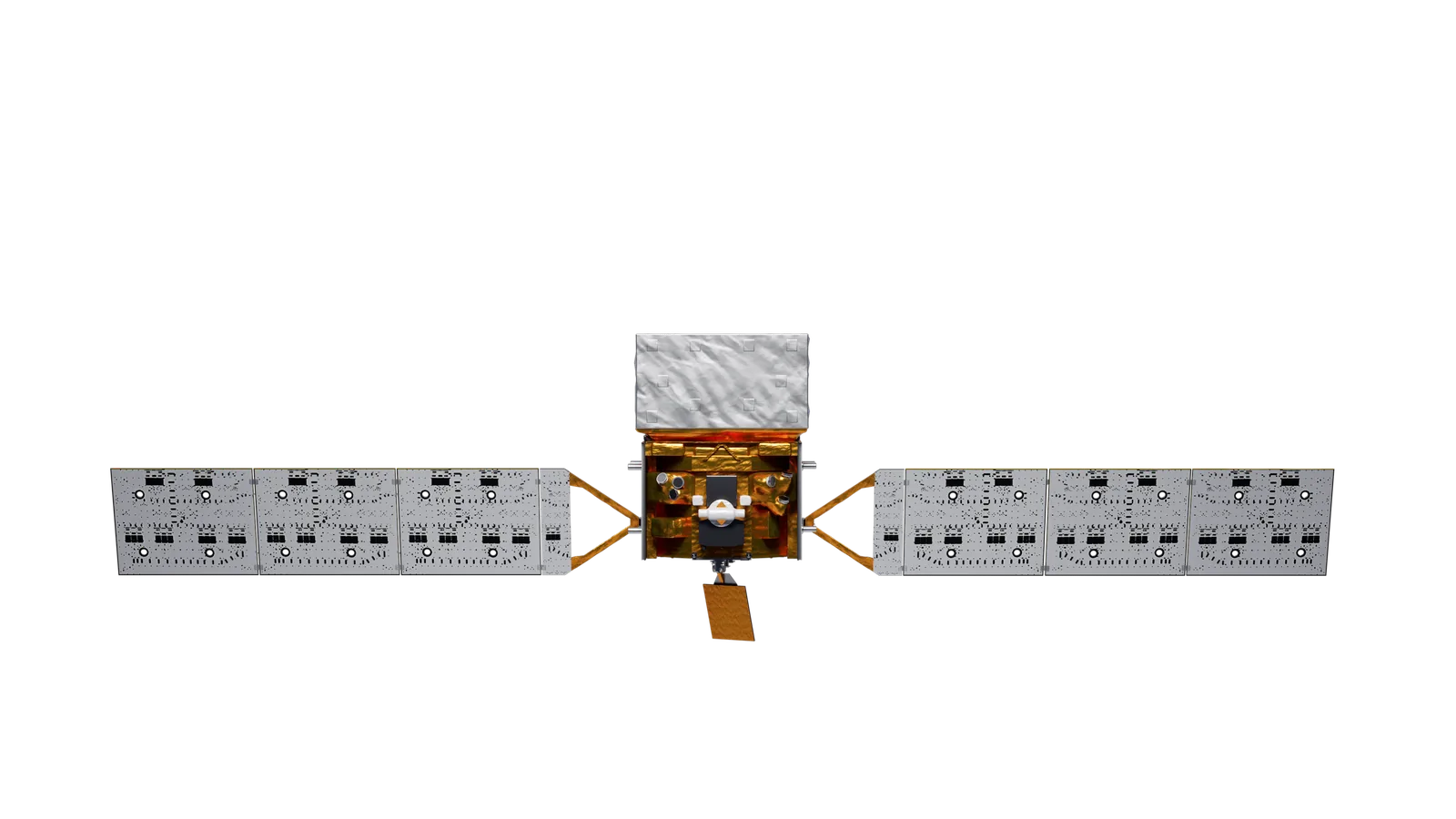
A Physical Review Letters paper published 19 November 2026, described the same day by NASA and the Max Planck Society, reports a new way to search public observations from NASA's Fermi Gamma-ray Space Telescope for pulsars — rapidly spinning neutron stars that sweep beams of radiation toward Earth.
The difficulty is statistical and computational. Fermi records only a sparse trickle of photons from a given pulsar, mixed with background, and a search must jointly guess the spin rate, how quickly that spin is slowing, and the precise position on the sky. Building on an approach by co-authors Dotan Gazith and Barak Zackay of the Weizmann Institute of Science, lead author Daniel Pook-Kolb of the Max Planck Institute for Gravitational Physics and colleagues treated the hunt as a shortest-vector problem on a high-dimensional lattice, using algorithms developed in cryptography.
In 15 years of public Fermi data, the method identified PSR J1622−7204, an isolated pulsar spinning 261 times per second. NASA and the Max Planck Society say the search used the equivalent of about 10 hours on a standard processor. The previous best method, a semicoherent search, used the equivalent of about 600 years of computing on such a processor and still missed it. NASA and the Max Planck Society describe the new method as about a million times faster; the raw figures, 10 hours versus 600 years, work out to roughly 500,000 times. Only one pulsar has been demonstrated with the new method so far.
Why it matters
Many gamma-ray pulsars have been computationally out of reach, even though the photons are already sitting in a public NASA archive. A much cheaper search can turn that existing dataset into new discoveries, and it shows the value of keeping space-telescope data openly available.
Looking ahead (speculative)
The authors' next goal is binary pulsars, whose orbital motion warps the signal in ways that have made them especially hard to find. That extension has not been shown yet. If it works, and if it can be combined with volunteer computing projects such as Einstein@Home, the same archive may still hold many objects that earlier searches could not afford to catch.
Sources
Sources
- Pook-Kolb et al., Gamma-ray pulsar discovery using a lattice-based method, Physical Review Letters, 19 November 2026
- NASA Science Data Powers New Method to Discover Hard-to-Find Pulsars, NASA Science, 19 November 2026
- Finding gamma-ray pulsars a million times faster, Max Planck Society, 19 November 2026