Astronomers reconstruct a star's spiral into its giant companion in Andromeda
A Nature paper and a NASA account, both dated 18 November 2026, reconstruct the common-envelope inspiral of AT 2025abao, a transient nicknamed Bao at the edge of the Andromeda galaxy.
Listen
AI-generated voices, script based on this article · 3:51
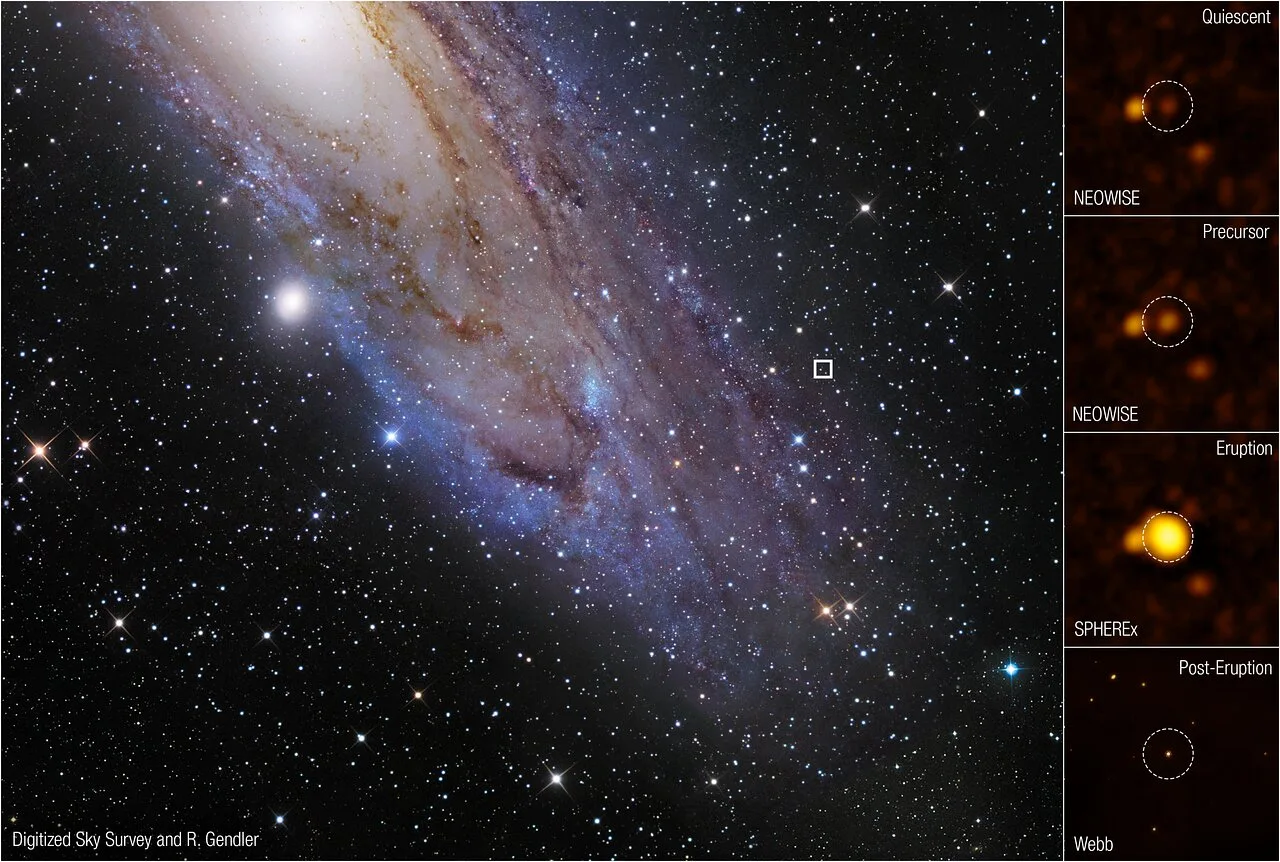
A Nature paper published 18 November 2026 reports observations of AT 2025abao, a transient eruption in the Andromeda galaxy, which the authors interpret as the common-envelope inspiral of a companion star inside a giant. The corresponding author is Viraj Karambelkar, a NASA Hubble Fellow at Columbia University's Columbia Astrophysics Laboratory, writing with Kishalay De and a large collaboration.
According to the paper's abstract, the system involved an approximately 7-solar-mass asymptotic giant branch star and an approximately 0.7-solar-mass companion. Pre- and post-eruption spectroscopy is best explained, the authors write, as the companion spiraling within the giant's convective envelope and powering a seven-year period of gradual brightening — which they present as a direct view of frictional-drag energy dissipation during common-envelope evolution. The subsequent merger, they say, ejected the outermost 10% of the envelope.
A NASA Science account published the same day nicknames the system Bao and says the James Webb Space Telescope observed it 47 days after the eruption peaked, the earliest follow-up of an event like this, according to Karambelkar. NASA notes that only future observations will show how the merged star's mass settles. The result is a single, well-observed astrophysical event, not a spacecraft technology demonstration.
Why it matters
Common-envelope evolution is thought to tighten binary stars on the way to compact pairs, but the inspiral itself has been hard to catch in the act. An event followed before, during and after the merger, with a measured envelope-ejection efficiency, gives theorists a rare empirical anchor.
Looking ahead (speculative)
NASA notes that surveys by the recently launched Nancy Grace Roman Space Telescope should turn up many new transients; 'There's going to be a large influx of similar discoveries just ahead,' Karambelkar said. How Bao itself settles remains, as NASA put it, a question for later observations.
Sources
Sources
More in Space
Space
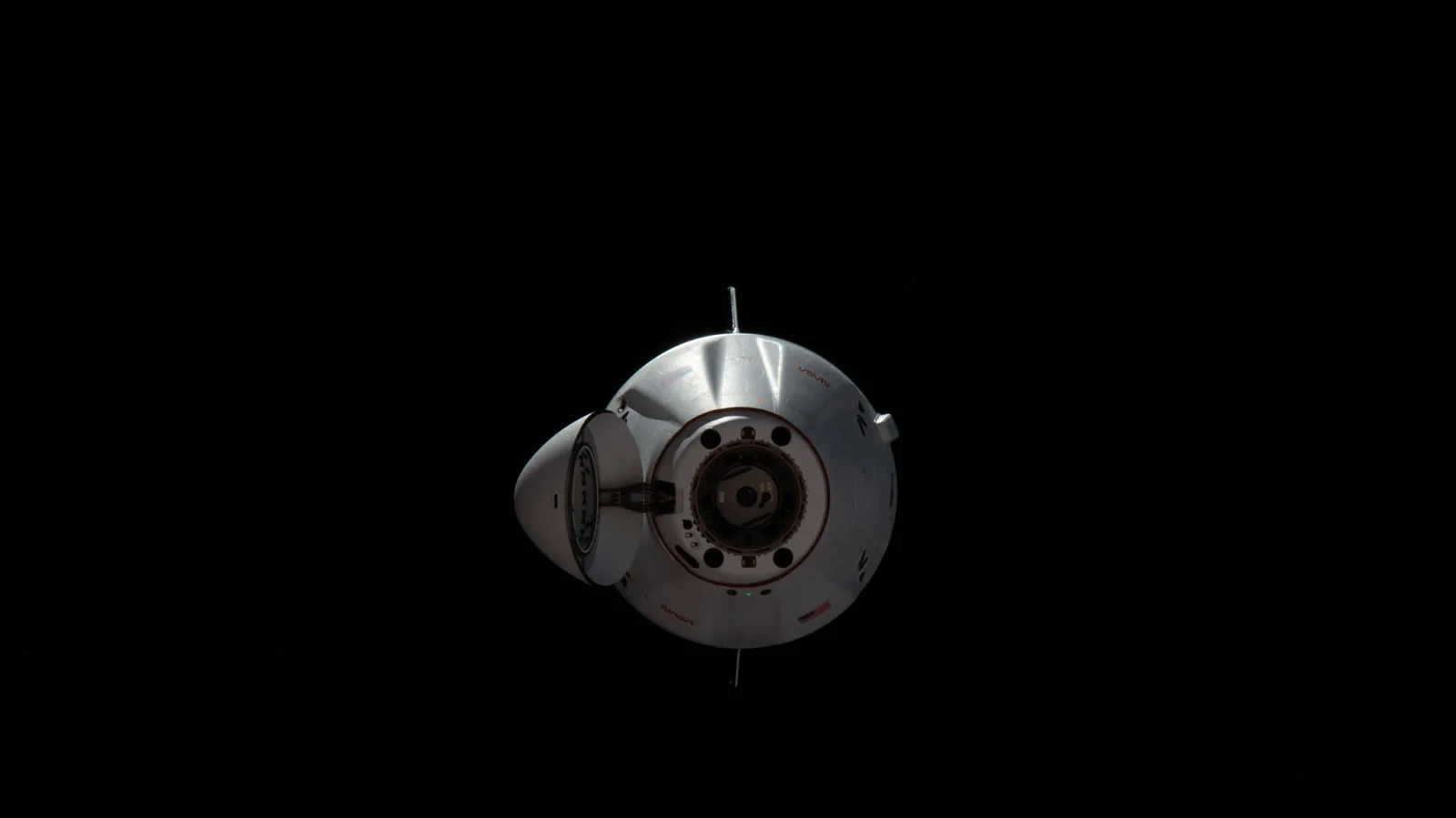
A Dragon capsule returns station samples, including a bioprinted vessel construct and tumor organoids
NASA said an unpiloted SpaceX Dragon splashed down in the Pacific Ocean near Los Angeles at 2:03 p.m. Pacific Standard Time on 21 November 2026, completing the 35th commercial resupply mission.
Space
ESA selects a seven-spacecraft Plasma Observatory as its next medium-class mission
On 19 November 2026, ESA Member States chose Plasma Observatory to study how the solar wind interacts with Earth's magnetic shield, with a launch provisionally foreseen for the late 2030s.
Space
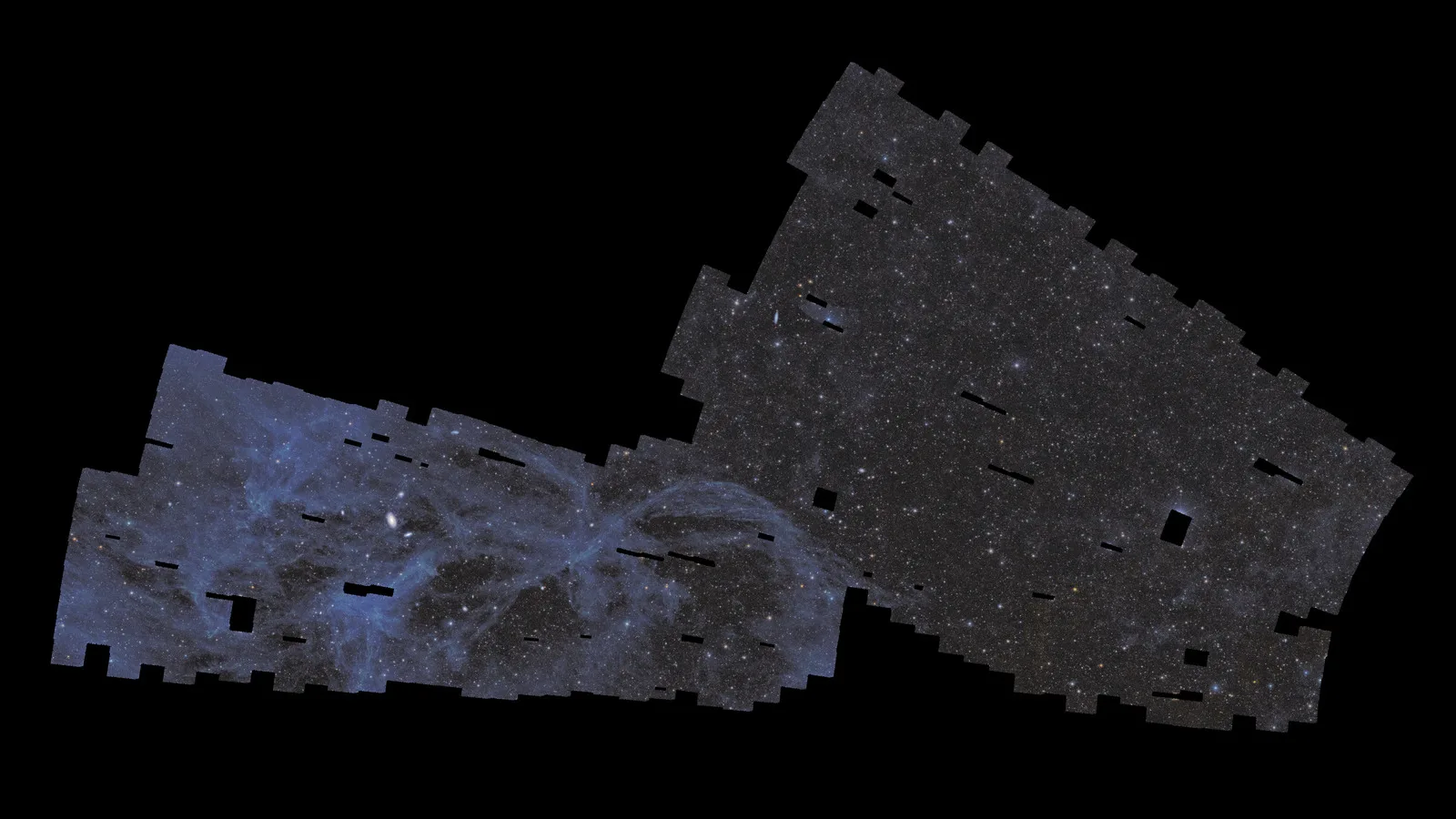
Euclid releases its first major map, capturing light from more than a billion objects
On 12 November 2026, ESA published Euclid DR1-Foundation: about 13 months of observations covering 1,900 square degrees and 1.7 million gigabytes of data.
Space
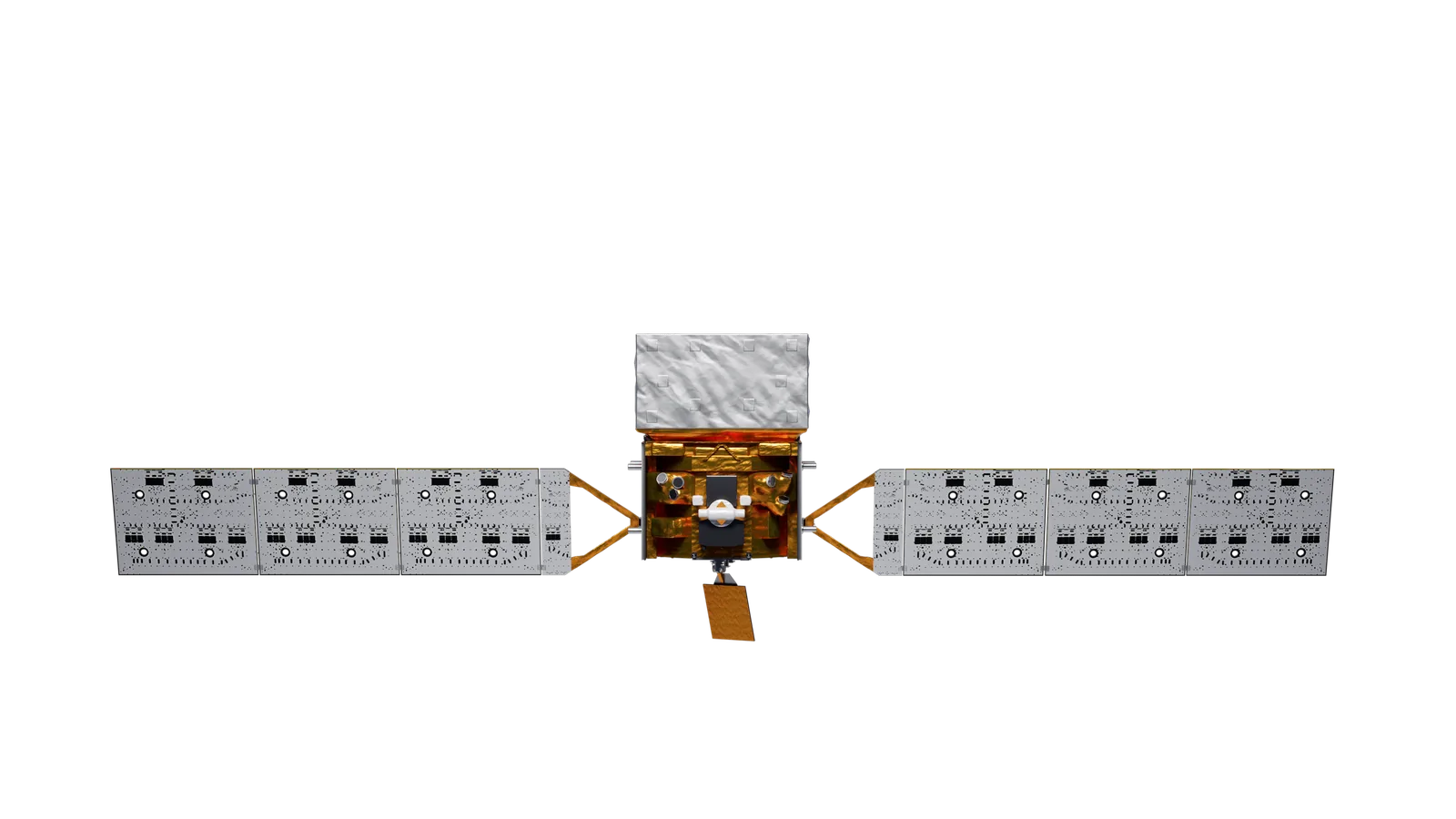
Cryptography-inspired algorithm finds a gamma-ray pulsar that a 600-CPU-year search missed
A cryptography-inspired lattice search spotted an isolated pulsar in 15 years of public Fermi data, in about 10 CPU hours, after the previous best method missed it.