Protein-design model yields lab-tested enzymes from text descriptions
A 21 October 2026 Nature paper from Westlake University describes Pinal, a 16-billion-parameter model whose designs showed the intended function in four laboratory tasks.
Listen
AI-generated voices, script based on this article · 3:58
In a Nature paper published 21 October 2026, researchers led from Westlake University describe Pinal, a 16-billion-parameter model trained to design proteins from natural-language descriptions. Fengyuan Dai and Shiyang You are co-first authors; Fajie Yuan of Westlake University, who led the team, is one of four corresponding authors.
According to the paper's abstract, Pinal was trained on 1.7 billion synthetically annotated protein–text pairs. The team then tested designs in the laboratory on four tasks: a fluorescent protein, a PET hydrolase, an alcohol dehydrogenase and a metabolic H-protein. In each case, the authors report, the intended function was observed, including catalytic activity for both enzymes. In a multi-enzyme carbon dioxide fixation pathway, they write that a Pinal-designed H-protein increased product titer 1.7-fold relative to the native E. coli H-protein, without iterative experimental optimization.
An official Westlake University news release dated 23 October 2026 discusses the same work. The study reports four lab-tested tasks, not a general-purpose product that can be assumed to work from any text prompt. Candidate sequences still need screening and wet-lab validation, and the paper does not show that the approach replaces conventional protein-engineering cycles across the board.
Why it matters
Designing a protein usually starts with structure or sequence templates, then a long stretch of experimental iteration. A model that can start from a written description and produce a candidate that works in the lab, even on a handful of tasks, gives biologists another way to propose sequences worth testing.
Looking ahead (speculative)
If later work expands the set of reliably designed functions, tools of this kind could speed early candidate generation in enzyme and metabolic-pathway research. That will still depend on laboratory confirmation, and it is too soon to treat text-to-protein design as a routine substitute for experiment.
Sources
Sources
More in AI
AI
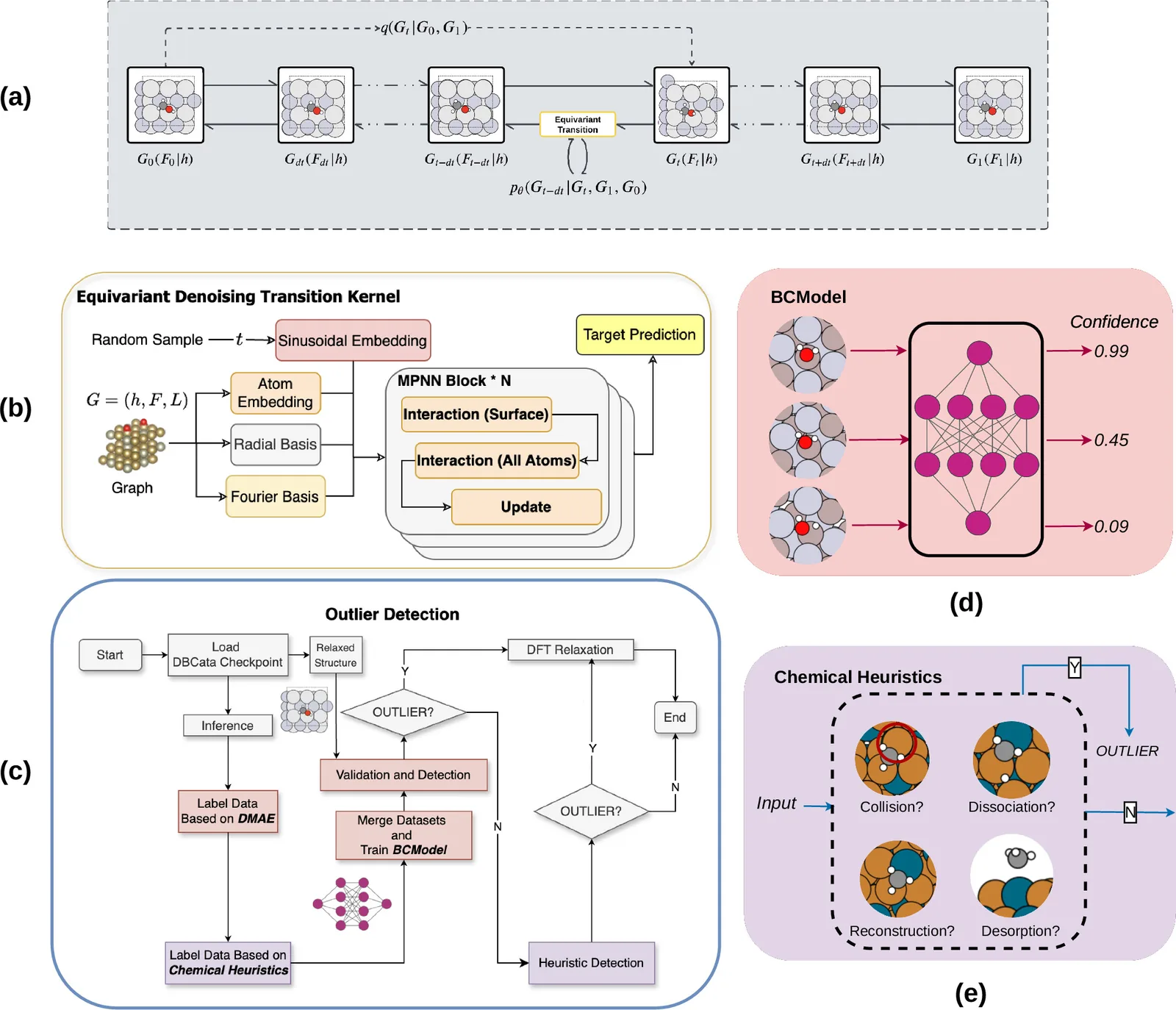
A generative model maps catalyst adsorption geometries without energy or force labels
A Nature Communications paper published 21 November 2026 describes DBCata, a generative model that produces near-equilibrium adsorption structures without energy or force labels and uses it for computational screening of alloy oxygen-reduction catalysts.
AI
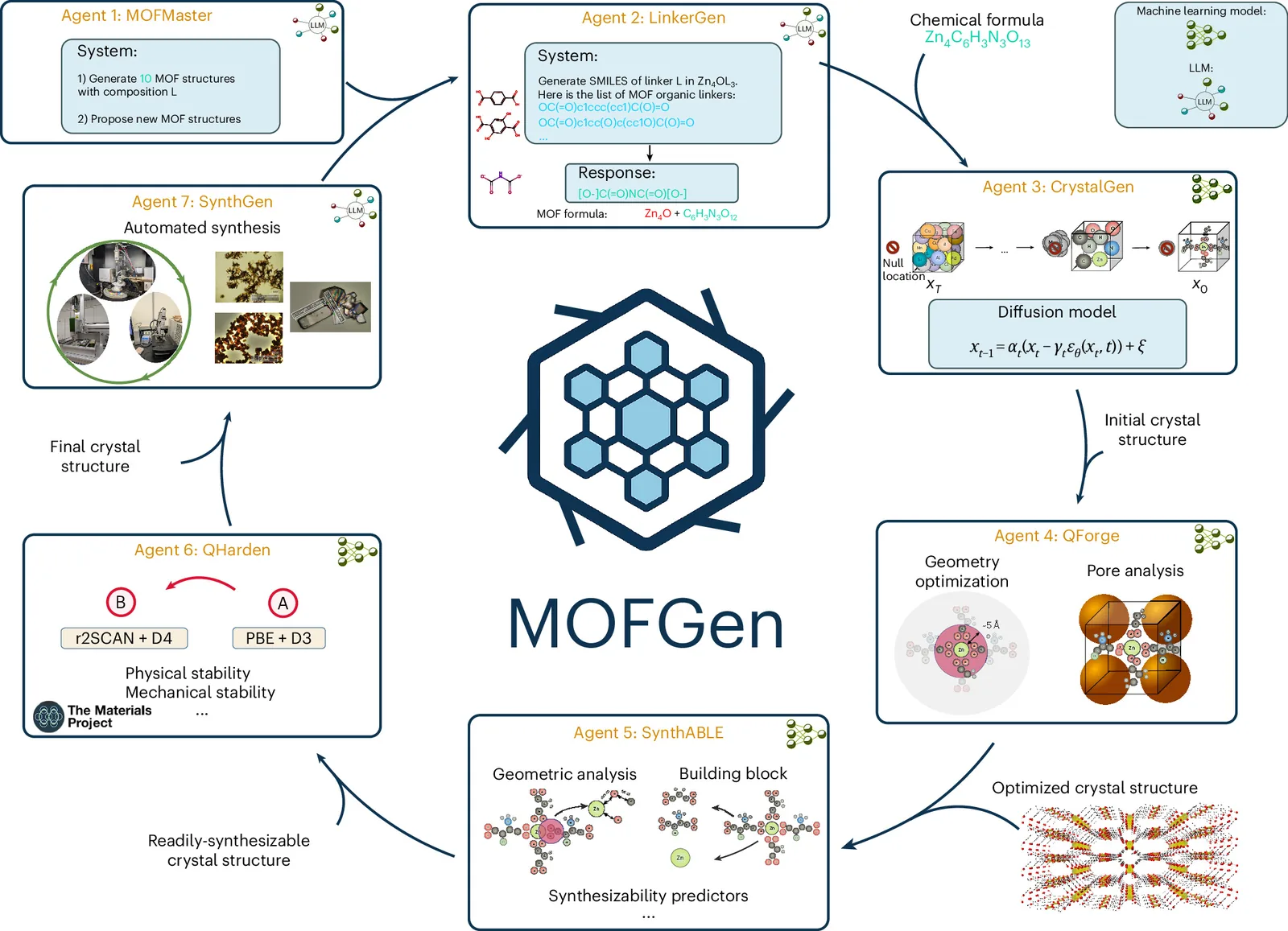
An AI system designs metal-organic frameworks, and four are made in the lab
A Nature Computational Science paper published 20 November 2026 describes MOFGen, an agentic system that generated hundreds of thousands of metal-organic framework structures; high-throughput experiments then produced four of the authors' "AI-dreamt" MOFs.
AI
A Google and Johns Hopkins agent reports a 76% MLE-Bench medal rate in a preprint
A 19 November 2026 arXiv preprint describes Pro² Agent, which the authors say matched the best reported 24-hour medal rate on the full MLE-Bench and reached 76.0% with a 48-hour budget.
AI
Medical vision-language model ties diagnoses to pixel-level visual evidence
A 29 October 2026 Nature Medicine paper introduces EVLF-FM, developed and tested on more than 1.3 million samples across 10 imaging modalities, with prospective trials still required before clinical use.