Medical vision-language model ties diagnoses to pixel-level visual evidence
A 29 October 2026 Nature Medicine paper introduces EVLF-FM, developed and tested on more than 1.3 million samples across 10 imaging modalities, with prospective trials still required before clinical use.
Listen
AI-generated voices, script based on this article · 4:11
A Nature Medicine paper published 29 October 2026 introduces EVLF-FM (Explainable Vision Language Foundation Model for Medicine), a multimodal model designed to combine diagnostic tasks with explanations tied to visual evidence. Yang Bai, Haoran Cheng and Yang Zhou are co-first authors. The work was jointly supervised by Yong Liu, of the Institute of Advanced Intelligence and Computing at the Agency for Science, Technology and Research (A*STAR) in Singapore, and Daniel Shu Wei Ting, of the Singapore Eye Research Institute and Singapore National Eye Center, who is the corresponding author, with collaborators at institutions including Duke-NUS Medical School and the University of Birmingham.
According to the paper, development and testing used more than 1.3 million samples from 18 global datasets across 10 imaging modalities in six specialties: dermatology, hepatology, ophthalmology, pathology, pulmonology and radiology. External validation used 13,443 independent test samples from 17 additional datasets. The model supports disease diagnosis, visual question answering and pixel-level visual grounding.
The authors report an average diagnostic accuracy of 0.895 in internal validation, and an average visual-grounding accuracy at 0.5 intersection over union ([email protected]) of 0.842 across nine modalities. A human evaluation of reasoning outputs with a framework the authors call S.C.O.R.E. produced a mean score of 4.25 out of 5, which they present as support for clinical interpretability.
The results come from testing on existing datasets, not from a prospective clinical trial, and EVLF-FM is a research model. The authors state that prospective clinical studies are required to evaluate safety, effectiveness and clinical utility before routine deployment, and that further validation across diverse healthcare settings is still needed.
This is news, not medical advice.
Why it matters
Many medical AI systems can output a label without showing which part of an image supports it. A model that is scored on both diagnosis and pixel-level grounding, if its results hold up in prospective studies, would give clinicians a more inspectable starting point — not a substitute for their judgment.
Looking ahead (speculative)
The next test is whether the same explanations remain reliable in new hospitals, scanners and patient populations. Until prospective studies are completed, EVLF-FM should be read as a research system, not as a tool ready for routine care.
Sources
Sources
More in AI
AI
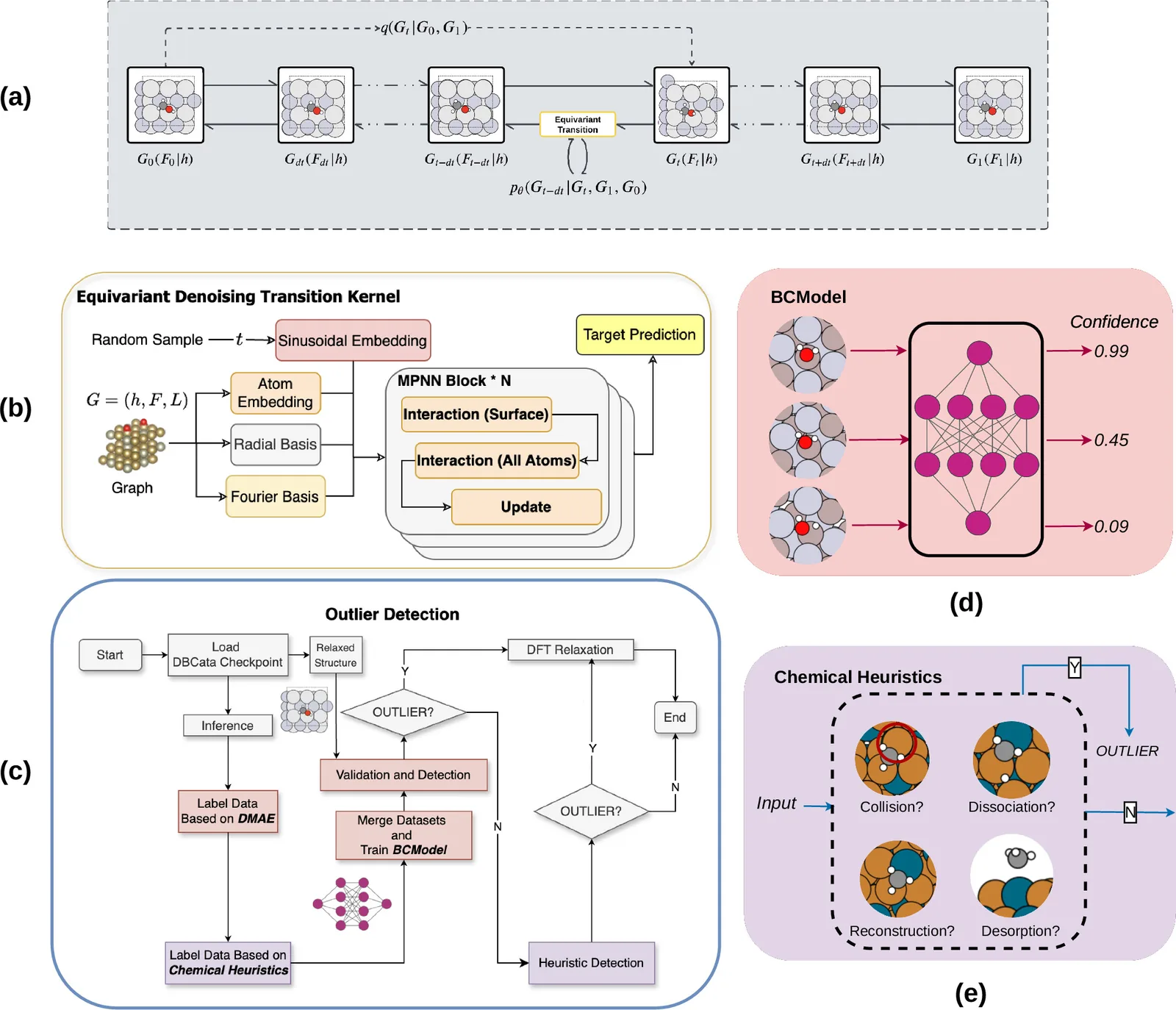
A generative model maps catalyst adsorption geometries without energy or force labels
A Nature Communications paper published 21 November 2026 describes DBCata, a generative model that produces near-equilibrium adsorption structures without energy or force labels and uses it for computational screening of alloy oxygen-reduction catalysts.
AI
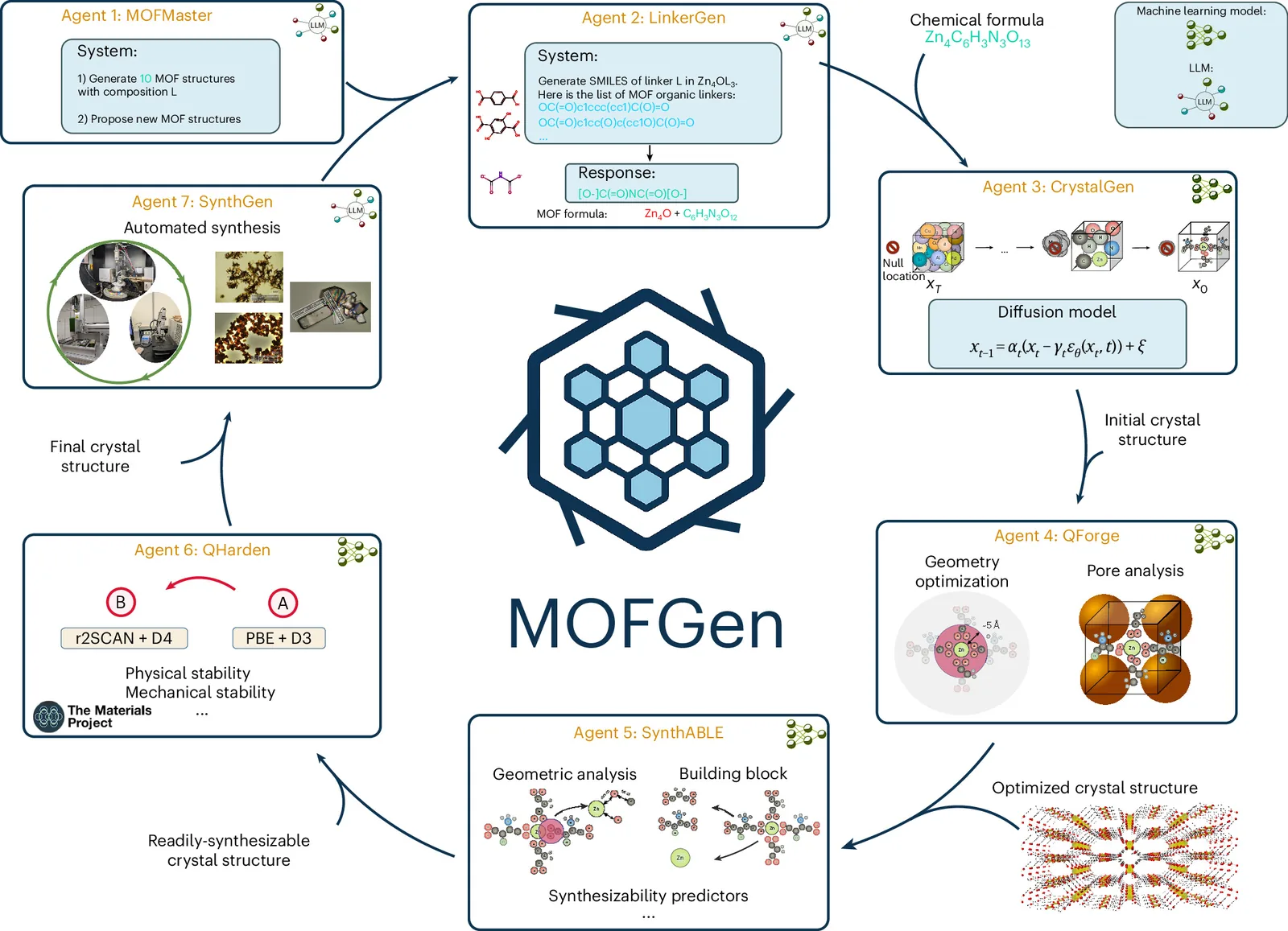
An AI system designs metal-organic frameworks, and four are made in the lab
A Nature Computational Science paper published 20 November 2026 describes MOFGen, an agentic system that generated hundreds of thousands of metal-organic framework structures; high-throughput experiments then produced four of the authors' "AI-dreamt" MOFs.
AI
A Google and Johns Hopkins agent reports a 76% MLE-Bench medal rate in a preprint
A 19 November 2026 arXiv preprint describes Pro² Agent, which the authors say matched the best reported 24-hour medal rate on the full MLE-Bench and reached 76.0% with a 48-hour budget.
AI
AI agents write quantum programs that check out in a formal proof system, Google teams report
A 6 November 2026 preprint (revised 16 November) from Google DeepMind and Google Quantum AI describes Gemini 4 agents that produce Lean-verified programs and, the authors say, lower estimated resource costs.