A Google and Johns Hopkins agent reports a 76% MLE-Bench medal rate in a preprint
A 19 November 2026 arXiv preprint describes Pro² Agent, which the authors say matched the best reported 24-hour medal rate on the full MLE-Bench and reached 76.0% with a 48-hour budget.
Listen
AI-generated voices, script based on this article · 4:04
A preprint first posted on arXiv on 19 November 2026, and not yet peer reviewed, introduces Pro² Agent, an AI research agent that keeps an explicit "Problem State" of what is blocking success and which fixes look promising. Corresponding author Yixiong Chen of Johns Hopkins University, with colleagues at Google and Johns Hopkins, reports the work. Chen's contribution was made during an internship at Google; most of the co-authors are listed as Google employees, and Alan Yuille is at Johns Hopkins.
The authors argue that many research agents iterate on a codebase and a score, without writing down their understanding of the task. Pro² Agent, they write, first analyzes resources and constraints, links suspected problems to candidate solutions, and then updates those beliefs with targeted experiments. The system uses Gemini 3.5 Flash for implementation, debugging, and code review, and Gemini 3.1 Pro for higher-level supervision.
On the complete 75-task MLE-Bench, a suite of Kaggle machine-learning competitions, the authors report a 70.7% any-medal rate under the standard 24-hour budget, which they say matches the best previously reported result on the full benchmark, and a 76.0% medal rate with a 48-hour budget, which they describe as the highest rate yet reported on that complete set. Those complete-benchmark figures come from one run per budget, on one NVIDIA A100 GPU per task. The 48-hour score uses a longer budget than the usual 24-hour setting. In the 48-hour run, they say the agent produced a valid submission on every task, beat the human leaderboard median on 84.0% of tasks, and earned 57 medals (22 bronze, 16 silver, and 19 gold). They also report competitive results on PostTrainBench, and they release per-task research notes intended for human reuse.
These are the authors' benchmark claims on machine-learning engineering tasks, not a demonstration of wet-lab scientific discovery. Comparisons in the paper mix published systems that used different models, hardware, and time limits.
Why it matters
If an agent can keep a readable record of the problems it thinks it is solving, and can update that record with experiments, human researchers may be able to inspect and reuse its reasoning, not only its final code. The 48-hour result also suggests, on this benchmark, that extra time still helped.
Looking ahead (speculative)
Whether the 76.0% figure holds up under independent, multi-run tests, and whether a problem-state approach helps outside Kaggle-style machine-learning engineering, remains to be seen. The authors themselves point to longer, more parallel hypothesis testing as a next step.
Sources
Sources
More in AI
AI
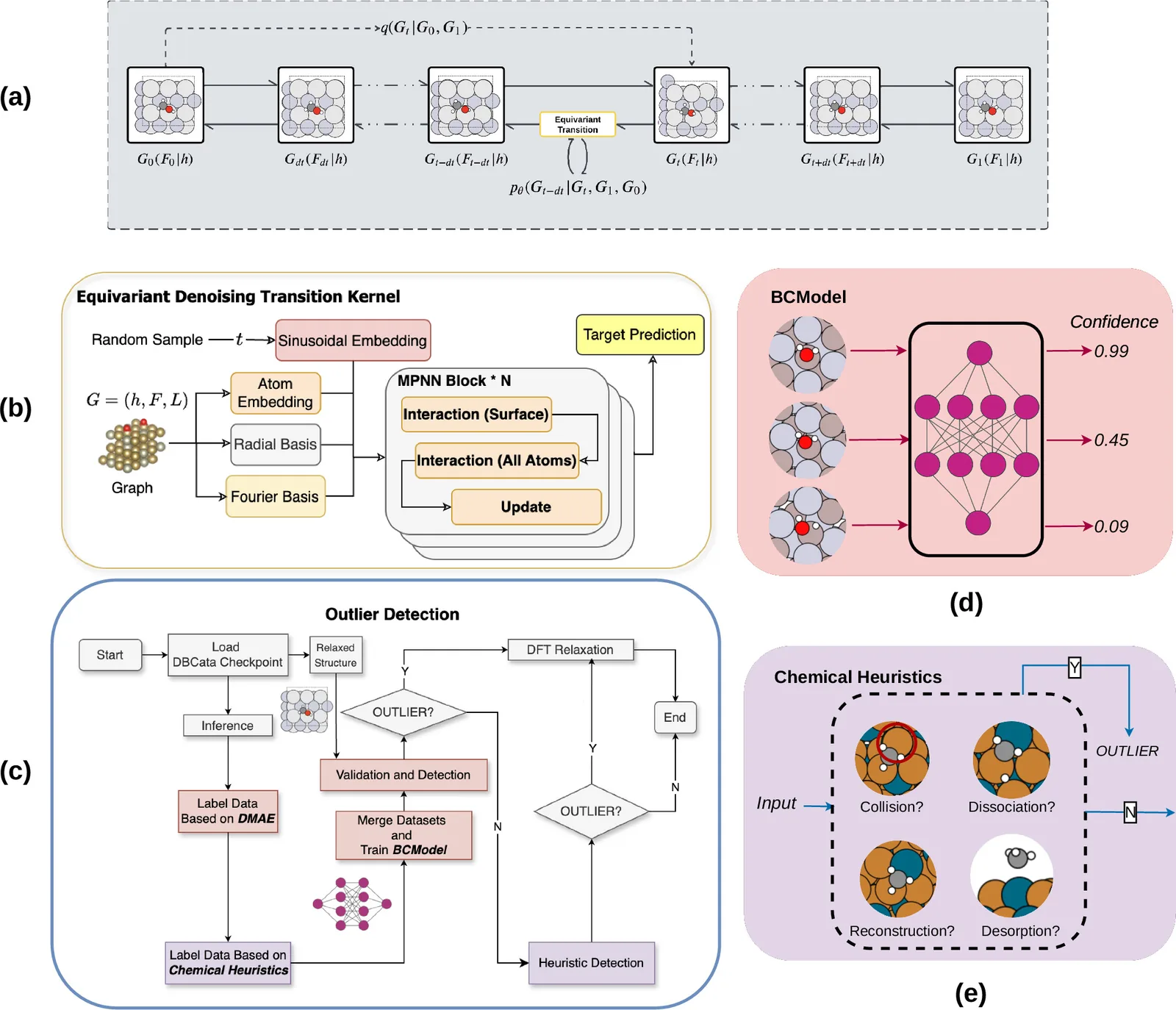
A generative model maps catalyst adsorption geometries without energy or force labels
A Nature Communications paper published 21 November 2026 describes DBCata, a generative model that produces near-equilibrium adsorption structures without energy or force labels and uses it for computational screening of alloy oxygen-reduction catalysts.
AI
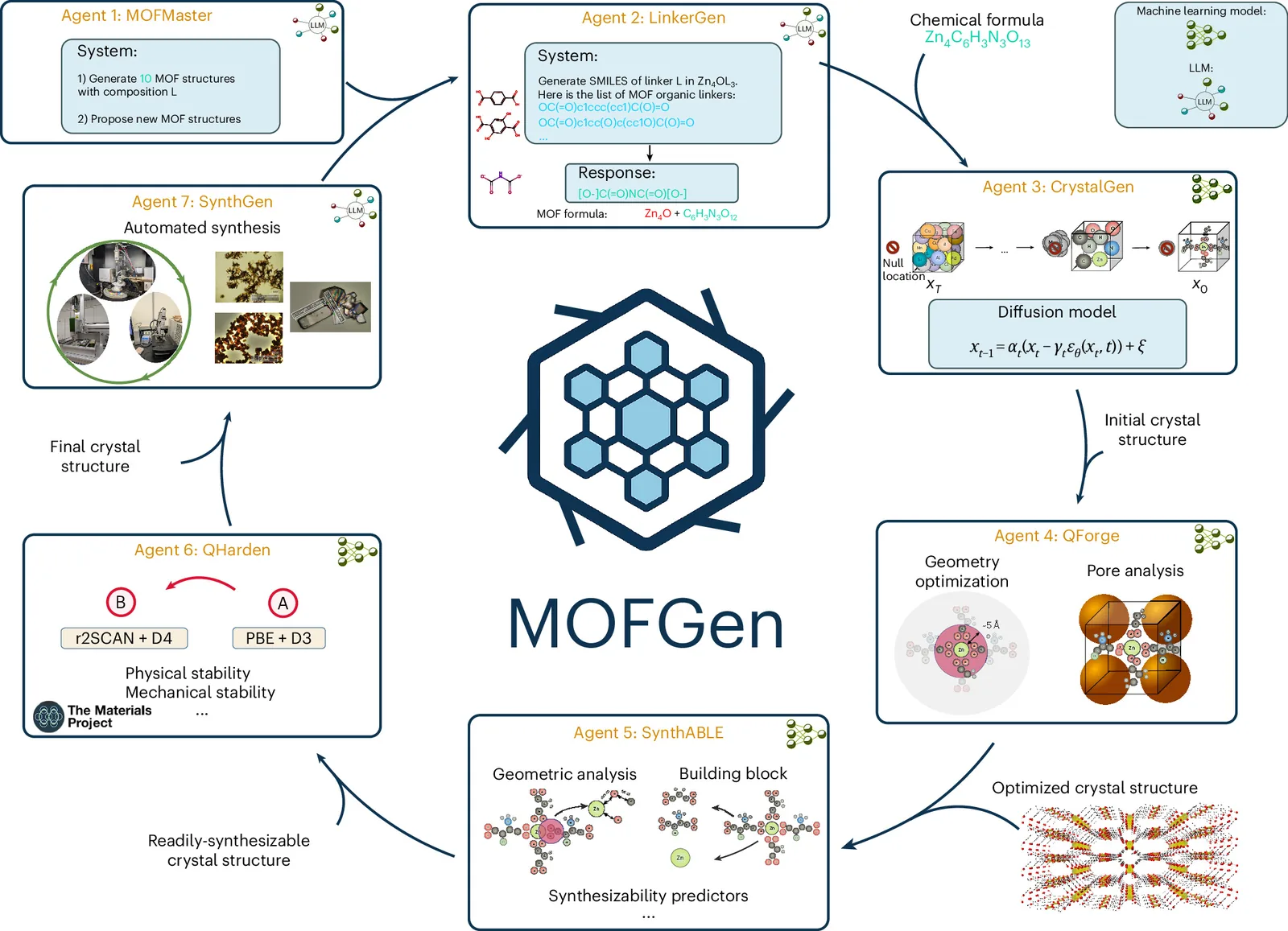
An AI system designs metal-organic frameworks, and four are made in the lab
A Nature Computational Science paper published 20 November 2026 describes MOFGen, an agentic system that generated hundreds of thousands of metal-organic framework structures; high-throughput experiments then produced four of the authors' "AI-dreamt" MOFs.
AI
Medical vision-language model ties diagnoses to pixel-level visual evidence
A 29 October 2026 Nature Medicine paper introduces EVLF-FM, developed and tested on more than 1.3 million samples across 10 imaging modalities, with prospective trials still required before clinical use.
AI
AI agents write quantum programs that check out in a formal proof system, Google teams report
A 6 November 2026 preprint (revised 16 November) from Google DeepMind and Google Quantum AI describes Gemini 4 agents that produce Lean-verified programs and, the authors say, lower estimated resource costs.