Open 27B language model rewrites its own weights, researchers report
In a 16 November 2026 preprint (revised 18 November), Jiajun Fan and colleagues say a Qwen3.5-27B model raised its accuracy with forward passes only, and no gradient updates.
Listen
AI-generated voices, script based on this article · 3:48
In a preprint first posted 16 November 2026 and revised on 18 November, Jiajun Fan, Neil He, Changyi Yang and colleagues report that an open 27-billion-parameter language model can rewrite its own weights using only forward passes — the same kind of computation used to generate answers — with no gradient-based training. The authors' listed affiliations are the University of Illinois Urbana-Champaign, Carnegie Mellon University, Rutgers University, Princeton University, Stanford University and Yale University. They call the procedure self-rewriting.
The team worked with models in the Qwen3.5 family at 2 billion, 4 billion, 9 billion and 27 billion parameters. In the 27B case, the model was given its weights, its graded answers and the ability to run itself. The authors report that one of its own edits raised accuracy by 6.6 points on problems it had not seen. In a further test, they say the model improved across eight successive edit sessions, with accuracy rising at each step. A damaged copy that initially solved almost nothing was, they write, restored to more than 80% of the original model's accuracy on unseen image tasks, without retraining and without reading the original weights.
The ability did not appear at every scale they tried. Under the same task and tools, the authors say the 2B model made no edit, while the 4B and 9B models edited themselves in ways that hurt performance.
The paper is a preprint and has not been peer reviewed. The results are laboratory sessions on one model family, not a method shown across vendors or tasks. The authors write that they believe self-rewriting is a necessary step toward recursive self-improvement: a model that keeps upgrading itself without a separate training run. That is their interpretation of the results, not a demonstration that recursive self-improvement has been achieved.
Why it matters
Most ways of improving a language model still depend on a new training run, or on extra computation at inference that leaves the weights unchanged. A method that writes a measured gain back into the weights, if it holds up under independent tests, would be a different kind of update — one that can be inspected after the fact.
Looking ahead (speculative)
If other groups can reproduce the 27B sessions, and if the pattern holds in other model families, researchers will want to know how far a sequence of self-edits can go before it plateaus or overfits. Those questions are open. The smaller models in this study are a reminder that the same tools do not automatically help at every scale.
Sources
Sources
More in AI
AI
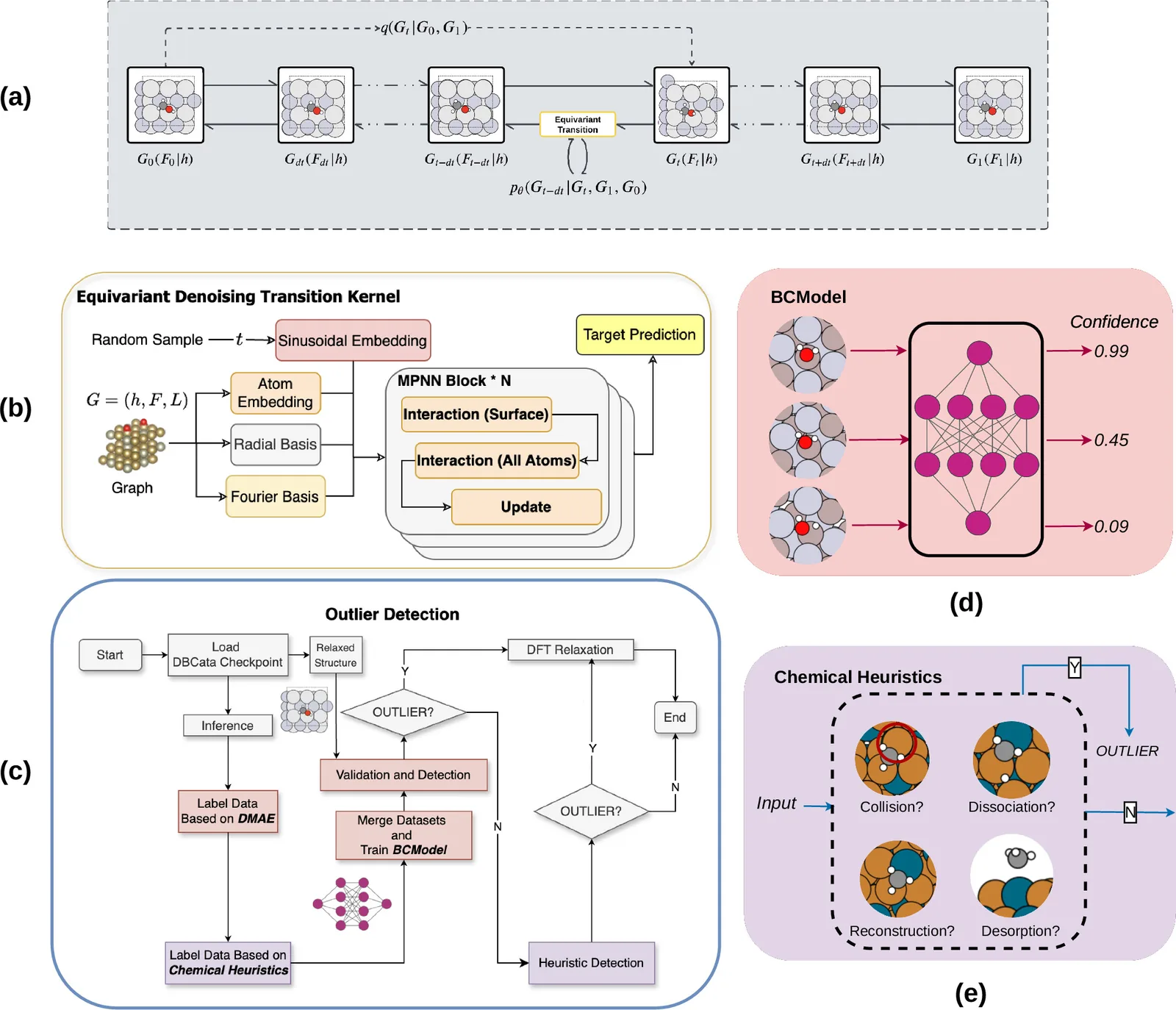
A generative model maps catalyst adsorption geometries without energy or force labels
A Nature Communications paper published 21 November 2026 describes DBCata, a generative model that produces near-equilibrium adsorption structures without energy or force labels and uses it for computational screening of alloy oxygen-reduction catalysts.
AI
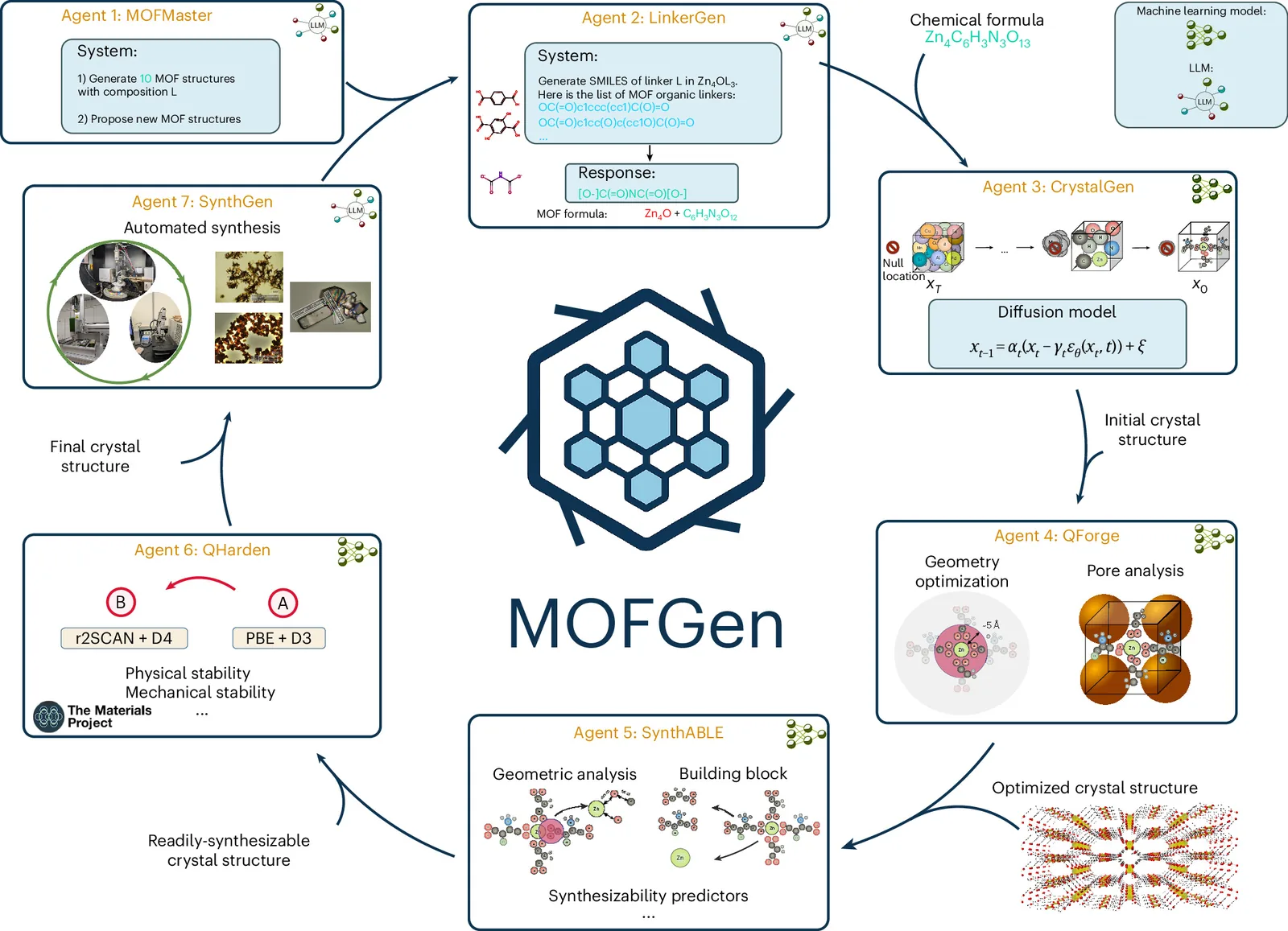
An AI system designs metal-organic frameworks, and four are made in the lab
A Nature Computational Science paper published 20 November 2026 describes MOFGen, an agentic system that generated hundreds of thousands of metal-organic framework structures; high-throughput experiments then produced four of the authors' "AI-dreamt" MOFs.
AI
A Google and Johns Hopkins agent reports a 76% MLE-Bench medal rate in a preprint
A 19 November 2026 arXiv preprint describes Pro² Agent, which the authors say matched the best reported 24-hour medal rate on the full MLE-Bench and reached 76.0% with a 48-hour budget.
AI
Medical vision-language model ties diagnoses to pixel-level visual evidence
A 29 October 2026 Nature Medicine paper introduces EVLF-FM, developed and tested on more than 1.3 million samples across 10 imaging modalities, with prospective trials still required before clinical use.