AI agents write quantum programs that check out in a formal proof system, Google teams report
A 6 November 2026 preprint (revised 16 November) from Google DeepMind and Google Quantum AI describes Gemini 4 agents that produce Lean-verified programs and, the authors say, lower estimated resource costs.
Listen
AI-generated voices, script based on this article · 3:43
In a preprint first posted 6 November 2026 and last revised on 16 November, Sergey Shirobokov, Ben Jaderberg, George Tsoukalas and colleagues at Google DeepMind and Google Quantum AI describe a system in which Gemini 4 agents write quantum programs against formal specifications in the Lean theorem prover, then check that the programs are correct and meet a cost bound.
The authors report resource improvements of up to 2.57 times on a parallel-search problem, 290 times on quantum arithmetic, and 12 times, 8 times and 2.5 times on simulations they describe as relevant to fusion, photochemistry and drug metabolism. Those figures are the authors' comparisons of formally verified resource estimates. They are not runtime measurements from a large-scale quantum computer.
The work is a preprint and has not been peer reviewed. Human researchers still write the problem specifications that the agents must satisfy. The system addresses a known bottleneck — finding programs that are both correct and cheaper — but it does not by itself demonstrate a useful algorithm running on hardware. The authors write that reaching early hardware will require further orders-of-magnitude improvements.
Why it matters
Correctness and resource cost are hard to check by inspection once a quantum program grows beyond a handful of operations. A workflow that produces a machine-checked proof alongside a cheaper program, if independently reproduced, would give researchers a way to trust the estimate before they spend hardware time.
Looking ahead (speculative)
If the same loop can be applied to a wider set of specifications, it could become a practical assistant for algorithm designers. Whether the estimated savings will survive compilation onto real devices is a separate question, and one this preprint does not settle.
Sources
Sources
More in AI
AI
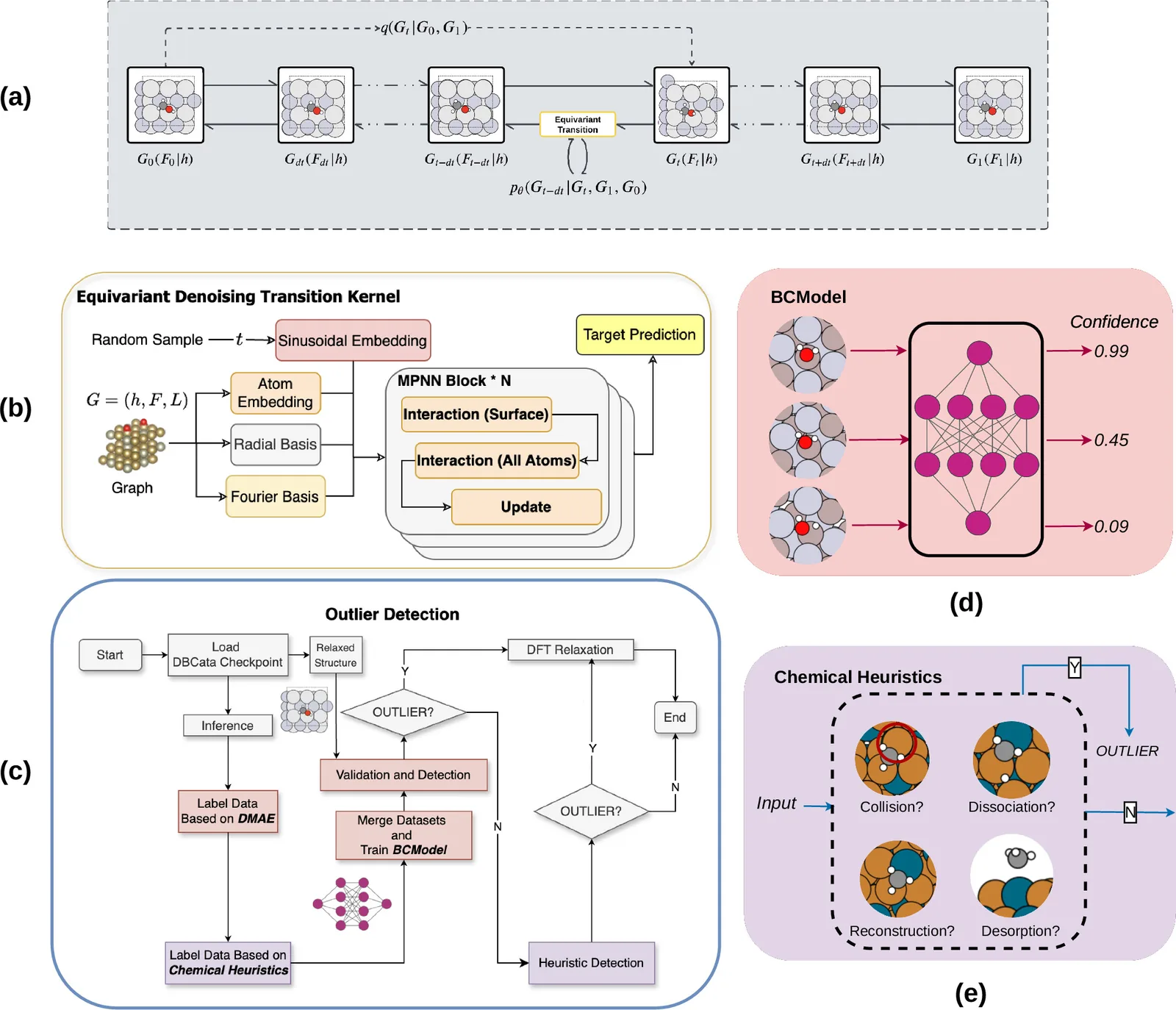
A generative model maps catalyst adsorption geometries without energy or force labels
A Nature Communications paper published 21 November 2026 describes DBCata, a generative model that produces near-equilibrium adsorption structures without energy or force labels and uses it for computational screening of alloy oxygen-reduction catalysts.
AI
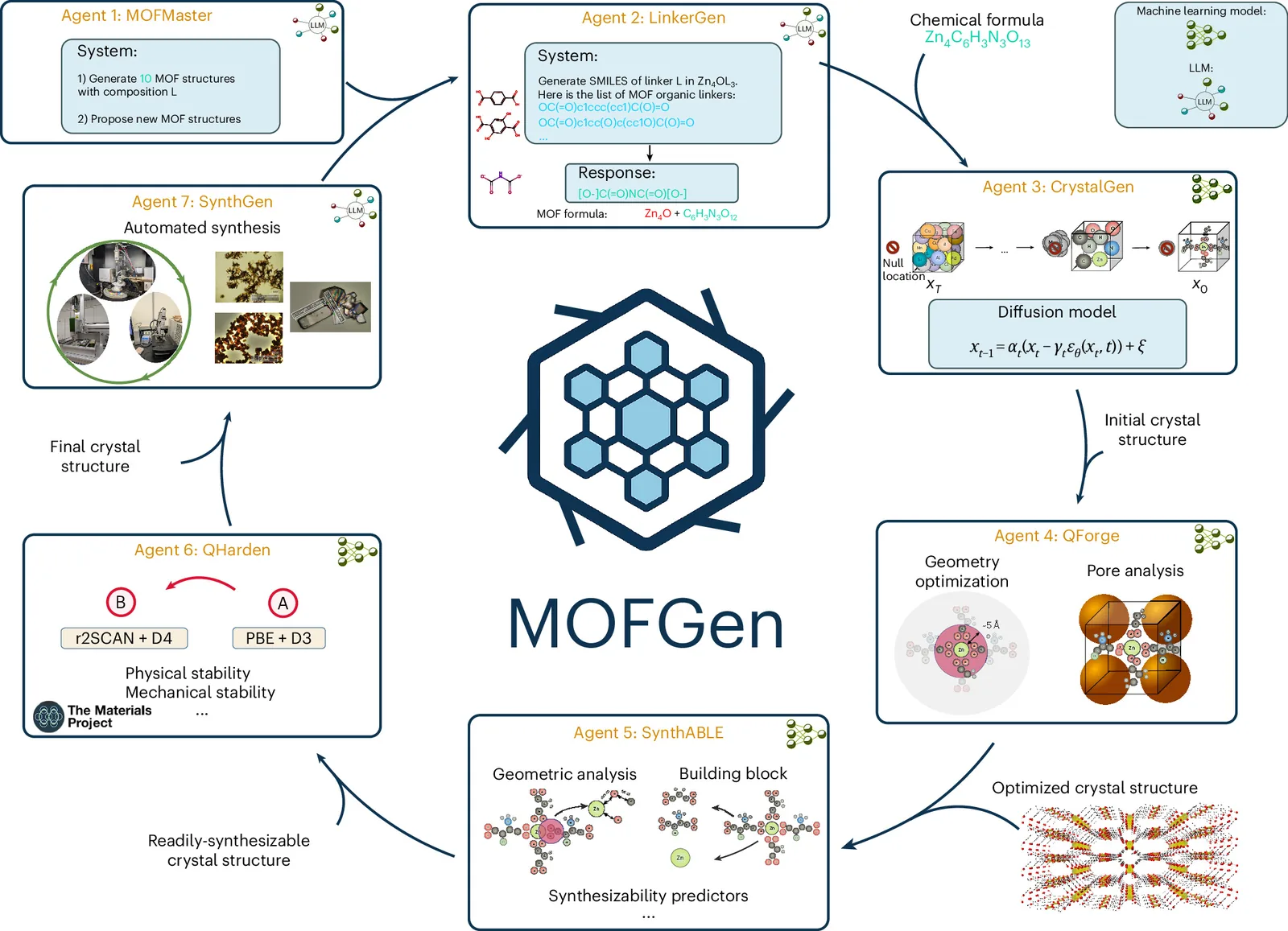
An AI system designs metal-organic frameworks, and four are made in the lab
A Nature Computational Science paper published 20 November 2026 describes MOFGen, an agentic system that generated hundreds of thousands of metal-organic framework structures; high-throughput experiments then produced four of the authors' "AI-dreamt" MOFs.
AI
A Google and Johns Hopkins agent reports a 76% MLE-Bench medal rate in a preprint
A 19 November 2026 arXiv preprint describes Pro² Agent, which the authors say matched the best reported 24-hour medal rate on the full MLE-Bench and reached 76.0% with a 48-hour budget.
AI
Medical vision-language model ties diagnoses to pixel-level visual evidence
A 29 October 2026 Nature Medicine paper introduces EVLF-FM, developed and tested on more than 1.3 million samples across 10 imaging modalities, with prospective trials still required before clinical use.