A pathology model learns from tumor genomes, then scores 107 cancer tasks
Nature Cancer published THREADS on 20 November 2026, a whole-slide foundation model pretrained by aligning more than 47,000 hematoxylin-and-eosin tissue sections with genomic or transcriptomic profiles.
Listen
AI-generated voices, script based on this article · 3:49
Nature Cancer published a paper on 20 November 2026 introducing THREADS, a whole-slide foundation model that learns general-purpose representations of tissue by aligning morphology on hematoxylin-and-eosin-stained sections with genomic or transcriptomic profiles, rather than with image-based objectives, coarse tissue labels, or pathology reports. Co-lead authors are Anurag Vaidya, Andrew Zhang, and Guillaume Jaume; corresponding author Faisal Mahmood jointly supervised the work with Long Phi Le. The team is based at Mass General Brigham, Harvard Medical School, the Broad Institute, and collaborating institutions.
THREADS was pretrained on more than 47,000 hematoxylin-and-eosin-stained tissue sections and evaluated across 107 oncology tasks, including cancer subtyping and grading, tumor-microenvironment characterization, treatment-response prediction, and survival analysis. The authors say it consistently outperformed leading whole-slide foundation models and supervised baselines, with strong transfer across external cohorts and high label efficiency. A Mass General Brigham account of the paper likewise says THREADS outperformed the other models overall and performed particularly well when limited data were available. Those comparisons are research-benchmark results, including tests on external cohorts, not a measure of bedside performance.
This is a retrospective model evaluation, not a prospective diagnostic trial and not a licensed medical device. Neither the abstract nor the Mass General Brigham summary reports a clinical deployment or a regulatory clearance.
Ming Y. Lu, Drew F. K. Williamson, Richard J. Chen, Le, and Mahmood hold equity in ModellaAI and Mahmood is a scientific advisor for Danaher Corporation; the paper lists further equity interests in Aevius Labs, Tremont AI, and Saterra AI as unrelated to this work.
Why it matters
Many of the most specific questions in cancer pathology come with few labeled examples. A model pretrained to connect how tissue looks with its molecular profile is being tested as a way to carry knowledge into those low-data tasks, which is a research question worth scoring carefully.
Looking ahead (speculative)
The authors say the results motivate future extensions that incorporate additional molecular, spatial, and clinical modalities. Those extensions, and any path from retrospective benchmarks to a diagnostic tool, are not demonstrated here.
This is news, not medical advice.
Sources
Sources
- Vaidya, Zhang, Jaume, Le, Mahmood et al., A multimodal foundation model for molecular and morphologic data in oncology, Nature Cancer, 20 November 2026
- DOI 10.1038/s43018-026-01252-w
- Haley Bridger, THREADS ties together pathology and molecular biology to answer wide-ranging cancer questions, Mass General Brigham / MGRI Bench Press, 20 November 2026
More in Genetics & Medicine
Genetics & Medicine
An ultra-flexible auditory brainstem implant stays stable for more than 136 days in rats
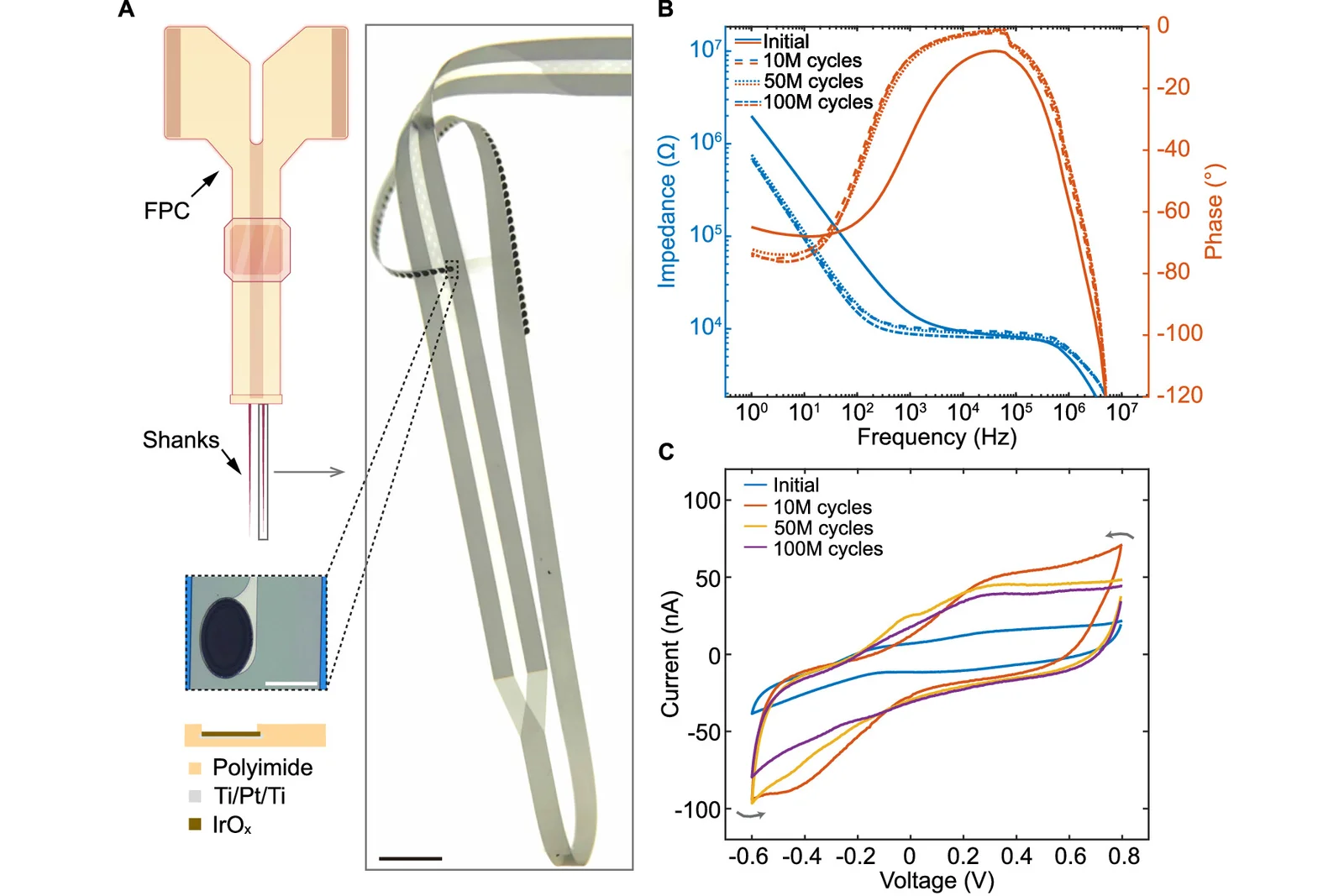
A Nature Communications paper published 22 November 2026 reports uFINE, a high-density, ultra-flexible penetrating electrode array, which in normal-hearing rats produced frequency-selective cochlear-nucleus stimulation that remained stable for more than 136 days.
Genetics & Medicine
Weekly semaglutide lowers BMI in children aged 6 to under 12 in a phase 3 trial
A New England Journal of Medicine paper published 16 November 2026 reports that in the phase 3 STEP Young trial, once-weekly semaglutide reduced BMI more than placebo at week 68 in 167 children with obesity.
Genetics & Medicine
A single infusion of an ANGPTL3 base editor lowers lipids for three years in primates
A Nature paper published 6 November 2026 reports that a GalNAc lipid-nanoparticle CRISPR adenine base editor cut circulating ANGPTL3 protein by more than 90% on average in nonhuman primates, with the effect still present at three years.
Genetics & Medicine
Chemogenetic gene therapy cuts seizures in a first three-patient study
A New England Journal of Medicine correspondence published 5 November 2026 reports that in three adults with drug-resistant hippocampal epilepsy, seizure frequency fell by 92.6% after a gene therapy made hippocampal neurons express an inhibitory receptor that a low-dose oral drug switches on.