Weekly semaglutide lowers BMI in children aged 6 to under 12 in a phase 3 trial
A New England Journal of Medicine paper published 16 November 2026 reports that in the phase 3 STEP Young trial, once-weekly semaglutide reduced BMI more than placebo at week 68 in 167 children with obesity.
Listen
AI-generated voices, script based on this article · 4:23
The New England Journal of Medicine published STEP Young, a phase 3, double-blind, randomized, placebo-controlled trial of once-weekly subcutaneous semaglutide, on 16 November 2026. Corresponding author Ania M. Jastreboff of Yale School of Medicine and colleagues, for the STEP Young Investigators, assigned 167 children aged 6 to under 12 years with obesity to semaglutide (112) or placebo (55). Both groups received lifestyle-modification counseling. Treatment lasted 104 weeks, followed by a 7-week washout. The trial was funded by Novo Nordisk, and several authors are employees of the company. Novo Nordisk says the drug is not approved in the United States for children younger than 12.
The primary end point was the percent change in body-mass index at week 68. In the treatment-regimen analysis, mean BMI change was −13.5% with semaglutide and +2.7% with placebo (estimated difference, −16.2 percentage points; 95% CI, −19.4 to −12.9; P<0.001). At week 104, the changes were −9.4% and +8.4% (difference, −17.8 percentage points; 95% CI, −22.2 to −13.3). At week 68, a reduction in BMI category occurred in 79% of the semaglutide group and 23% of the placebo group, and BMI fell below the obesity threshold (the 95th percentile for age and sex) in 38% versus 2%.
Adverse events occurred in 96% of the semaglutide group and 93% of the placebo group. Gastrointestinal effects were the most common and were more frequent with semaglutide, and such effects led to treatment discontinuation in one child in the semaglutide group. Novo Nordisk says no safety concerns were identified for growth or pubertal development.
This is a phase 3 trial in one pediatric age group. Long-term growth, safety, and what happens after treatment stops still matter.
Why it matters
Few approved medicines exist for obesity in children younger than 12. The trial offers a two-year, placebo-controlled readout of an existing drug in that age group, including gastrointestinal effects and growth measures.
Looking ahead (speculative)
Regulators will have to weigh the BMI reductions against the frequent gastrointestinal effects. That review has not been completed.
This is news, not medical advice.
Sources
Sources
- Jastreboff et al., for the STEP Young Investigators, Semaglutide for the Treatment of Obesity in Children 6 to <12 Years of Age, New England Journal of Medicine, 16 November 2026
- DOI 10.1056/NEJMoa2604058
- STEP Young, ClinicalTrials.gov NCT05726227
- Novo Nordisk release on the STEP Young trial, 16 November 2026
More in Genetics & Medicine
Genetics & Medicine
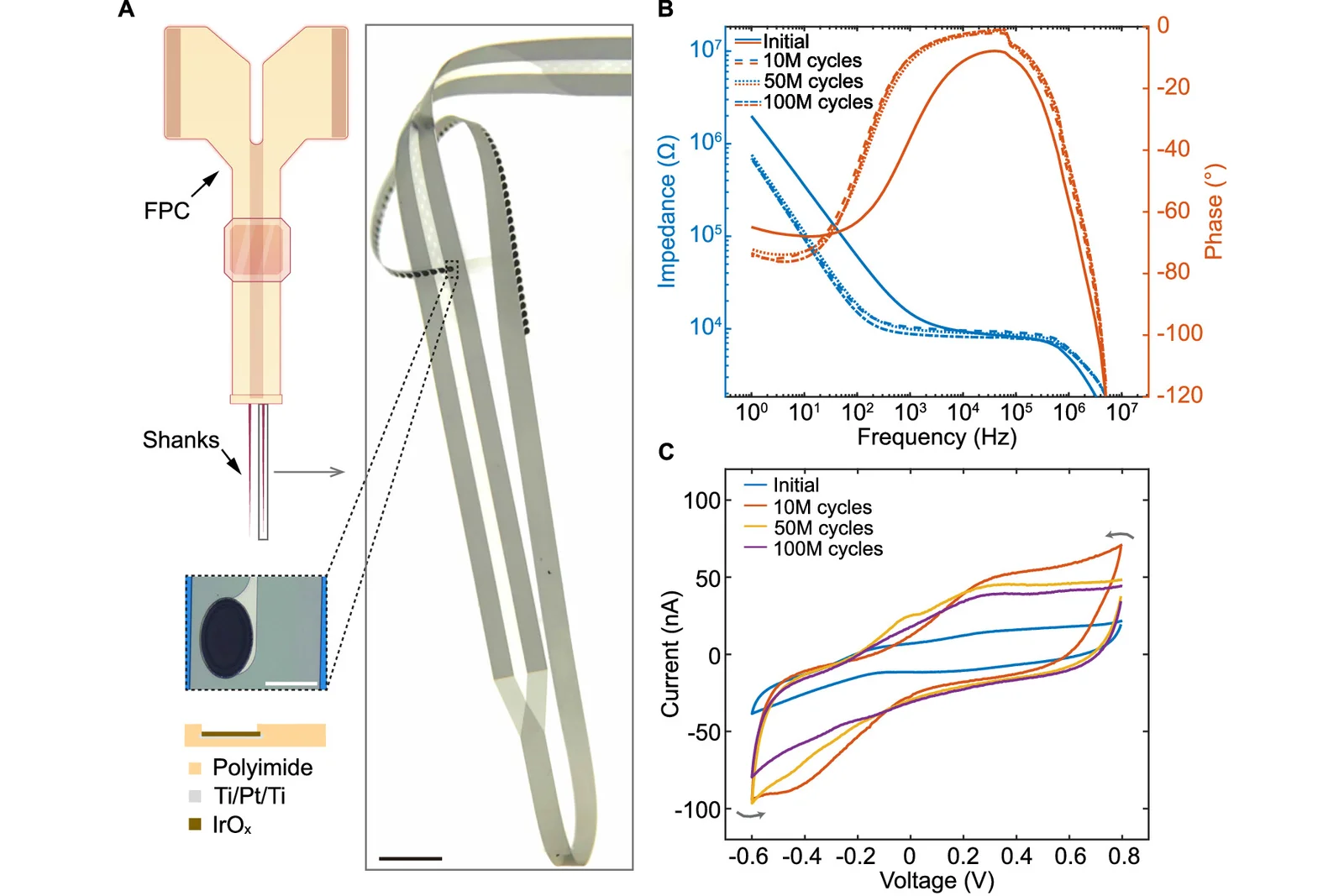
An ultra-flexible auditory brainstem implant stays stable for more than 136 days in rats
A Nature Communications paper published 22 November 2026 reports uFINE, a high-density, ultra-flexible penetrating electrode array, which in normal-hearing rats produced frequency-selective cochlear-nucleus stimulation that remained stable for more than 136 days.
Genetics & Medicine
A pathology model learns from tumor genomes, then scores 107 cancer tasks
Nature Cancer published THREADS on 20 November 2026, a whole-slide foundation model pretrained by aligning more than 47,000 hematoxylin-and-eosin tissue sections with genomic or transcriptomic profiles.
Genetics & Medicine
A single infusion of an ANGPTL3 base editor lowers lipids for three years in primates
A Nature paper published 6 November 2026 reports that a GalNAc lipid-nanoparticle CRISPR adenine base editor cut circulating ANGPTL3 protein by more than 90% on average in nonhuman primates, with the effect still present at three years.
Genetics & Medicine
Chemogenetic gene therapy cuts seizures in a first three-patient study
A New England Journal of Medicine correspondence published 5 November 2026 reports that in three adults with drug-resistant hippocampal epilepsy, seizure frequency fell by 92.6% after a gene therapy made hippocampal neurons express an inhibitory receptor that a low-dose oral drug switches on.